

Botticelli “The Birth of Venus”: when the line becomes poetry
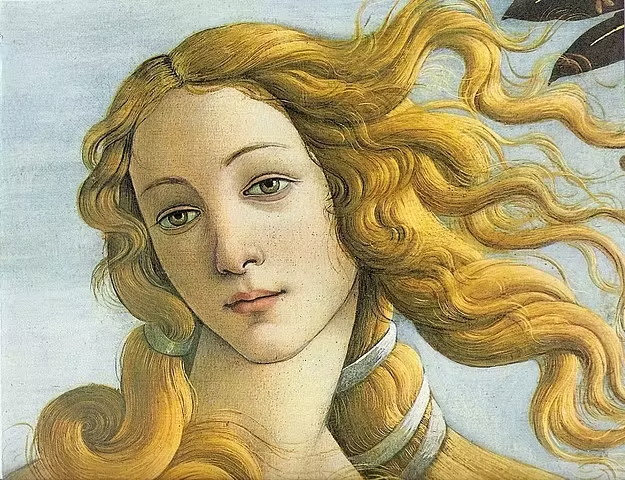
Venus rises from sea foam on a mother-of-pearl shell, and this is not just an illustration of an ancient myth. Botticelli caught her in that very moment of transition: she no longer belongs to the sea, but has not yet stepped onto solid earth. This painting is about the fragile state between two worlds — between the spiritual and the material — and precisely this state is the greatest challenge and inspiration for drawing.
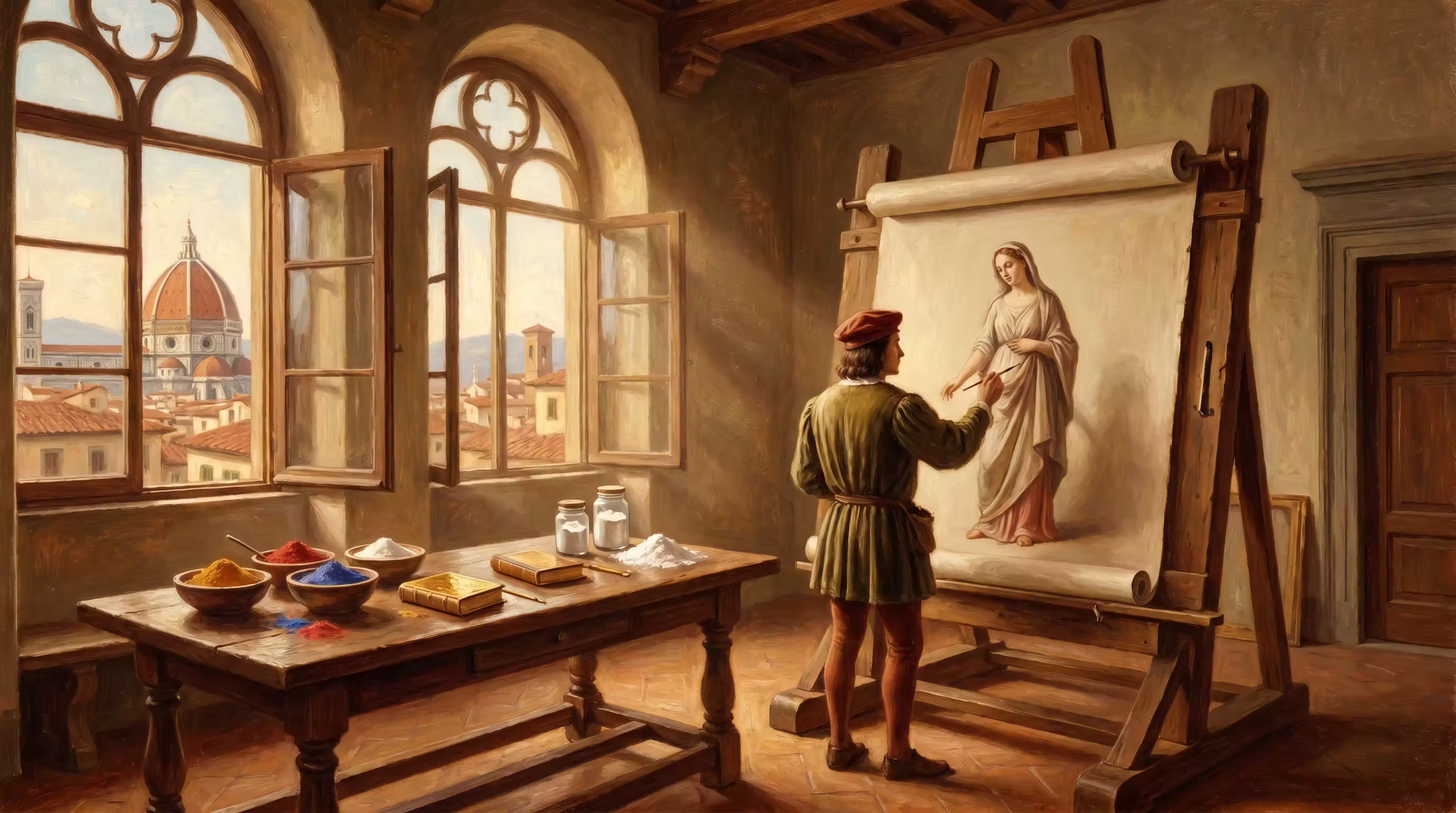
Creation story: from Neoplatonism to the bonfire of vanity
In the Middle Ages, the nude body was considered sinful and was depicted mostly in scenes of expulsion from paradise. Botticelli, along with Michelangelo (with his gigantic “David”), became one of those who brought the beauty of the nude back into art. In the classical tradition, physical perfection was seen as a mirror of spiritual and moral qualities.
The painting was created in Florence — the center of humanist studies. Cosimo de’ Medici sponsored the Platonic Academy there. According to the ideas of the Neoplatonists, contemplating physical beauty (embodied by Venus) is a path to elevating the human spirit and approaching the divine.
Yet at the end of his life, Botticelli experienced a profound moral crisis. When a religious fanatic, Girolamo Savonarola, came to power in Florence, the artist, yielding to his sermons, himself threw his secular paintings onto the notorious “Bonfire of the Vanities” in 1497. Fortunately, “The Birth of Venus” miraculously escaped the fire because it was kept at a closed private villa.
A true myth: Blood, foam, and the winds
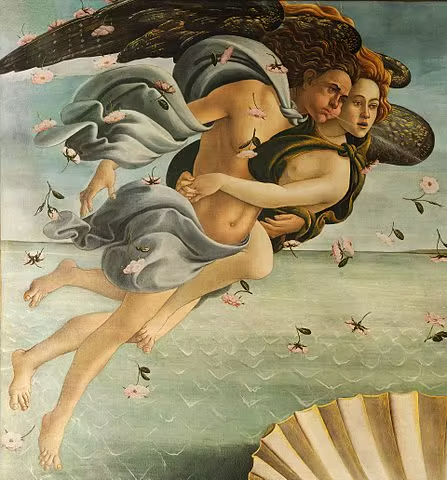
Ancient mythology is full of cruelty, and the birth of the goddess of love is no exception. According to the ancient Greek poet Hesiod, Venus was born not simply from water. The god Cronos overthrew his father Uranus, castrated him, and cast his genitals into the sea. It was this that fertilized the water, forming sea foam out of which the goddess was born.
In the painting, we see how Zephyrus, the god of the west wind, in strong embraces with the nymph Chloris, drives the shell toward the island of Cyprus with his breath (which, according to beliefs, had the power to create new life). On the shore, she is met by one of the Hours — the goddesses of the seasons — probably Spring. She stretches a luxurious, flower-embroidered mantle toward Venus to conceal her nudity.
What to look at here
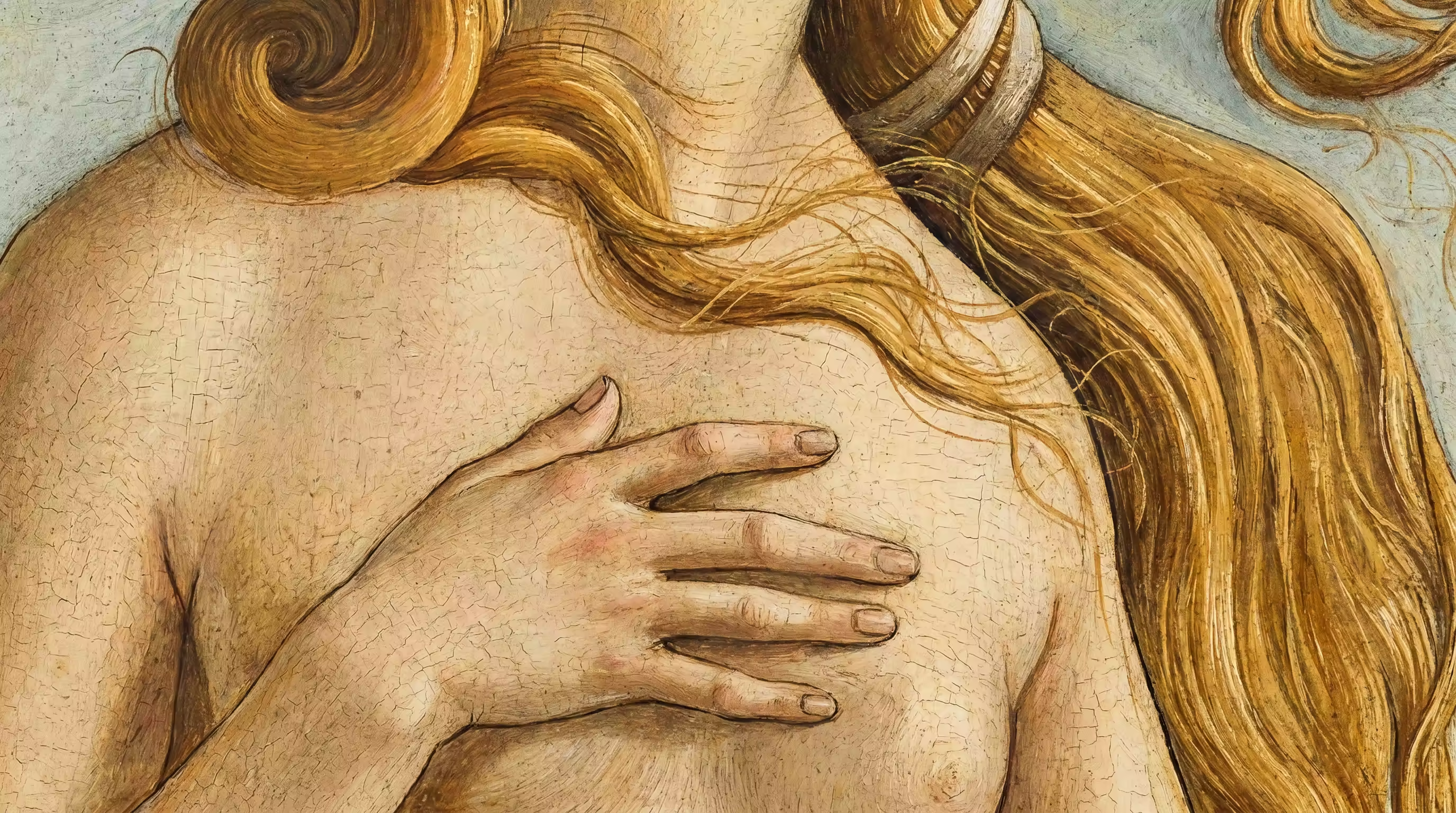
- Classical pose “Venus Pudica”: Venus shyly covers herself with her hands and hair. Botticelli was inspired by the classical antique sculpture “Venus Pudica,” bringing it into painting.
- An S-shaped line (gothic curve): Botticelli intentionally ignores strict anatomy. Venus has unnaturally long neck and sloping shoulders. The artist created not a realistic body, but a plastic movement from legs to head — an ideal, melodious line.
- Weightlessness: She hardly leans on the shell; her weight is not felt. She does not cast a shadow, which emphasizes her divine, immaterial nature.
Interesting facts
- Century of oblivion: Was the painting always this famous? Absolutely not. In the last years of Botticelli’s life, titans such as Leonardo da Vinci and Michelangelo overshadowed him. After centuries of complete obscurity, Botticelli’s work was rediscovered only in the 19th century!
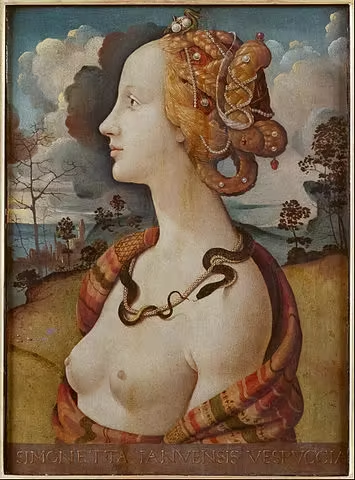
- Muse of Florence: The model for Venus was Simonetta Vespucci — the wife of Marco Vespucci (the cousin of the same Amerigo Vespucci, after whom America was named). She was a legendary beauty, admired by all of Florence, especially Giuliano de’ Medici, who openly showed his love for her.
- The artist’s final wish: Simonetta died very young, at the age of 23, from consumption (tuberculosis). Botticelli loved her all his life and asked to be buried at her feet in the church of Ognissanti. The Vespucci family agreed, and today their graves are in the same church.
What it gives the artist
- A rhythmic line is the foundation of expressiveness. Botticelli teaches us that contour can be the main tool. You don’t necessarily need to chase the perfect volume (chiaroscuro) if your line can convey movement and energy.
- Stylization matters more than anatomy. The figure should not look static and dry. The feeling of beauty often lies in intentional exaggeration to convey emotion and grace.
- Observing space. Studying how the master solves the space between heavy drapery of fabric (the Hour’s mantle), weightless hair, and smooth skin develops the eye of a modern illustrator incredibly.
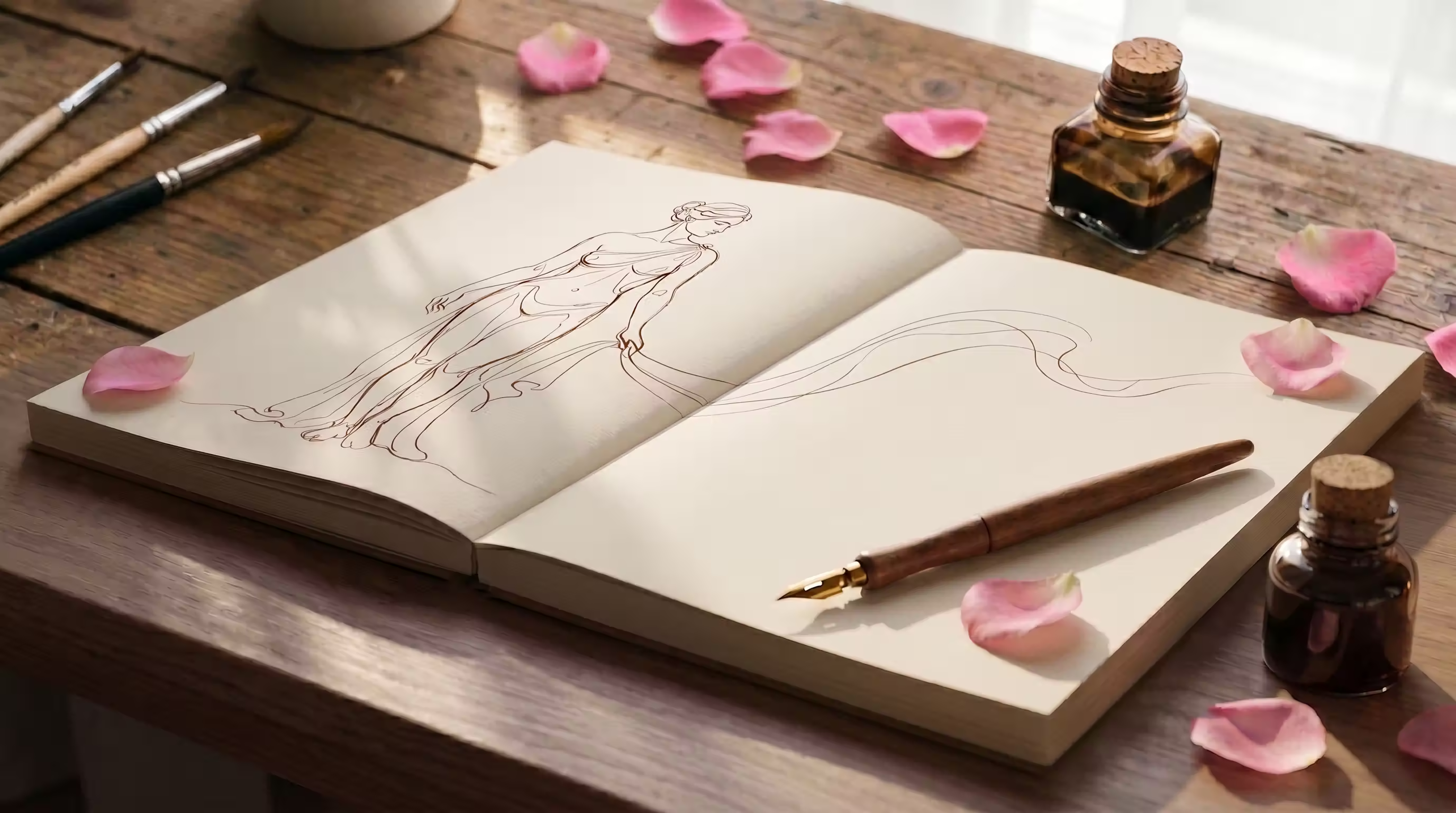
Botticelli’s nuanced line lays down most vividly on paper that provides no resistance to it. The Botticelli 1486 Plus sketchbook on Swedish design paper in a creamy tone, 150 g/m², is made specifically for this kind of work: its soft, perfectly smooth surface gratefully accepts liner, pen, or pencil strokes without smudging the contours, preserving each of your lines as poetry.