

«Draw every day» — advice everyone gives. But few people explain how to make it a habit, not just another item on the to-do list you didn’t do. Here’s a practical approach — without self-criticism and extra pressure.
Why it’s important to draw every day: a bit of Stoicism and Japanese shokunin philosophy
The Japanese word «shokunin» refers to a master of their craft — a person who, every day, does one thing better than yesterday. It’s not about genius. It’s about the discipline of repetition.
Marcus Aurelius wrote in «Meditations»: «Don’t waste time thinking about what a good person should be. Be one». Replace «a person» with «an artist» — and you’ll get the best advice for daily sketching.
10 minutes a day give more than a three-hour session once a week. Not because the total hours are greater (they’re roughly equal), but because daily practice builds neural connections, forms “muscle memory” in your hand and eye, and gradually turns «I’m trying to draw» into «I draw».
How the A5 Plus format helps you always carry your sketchbook with you
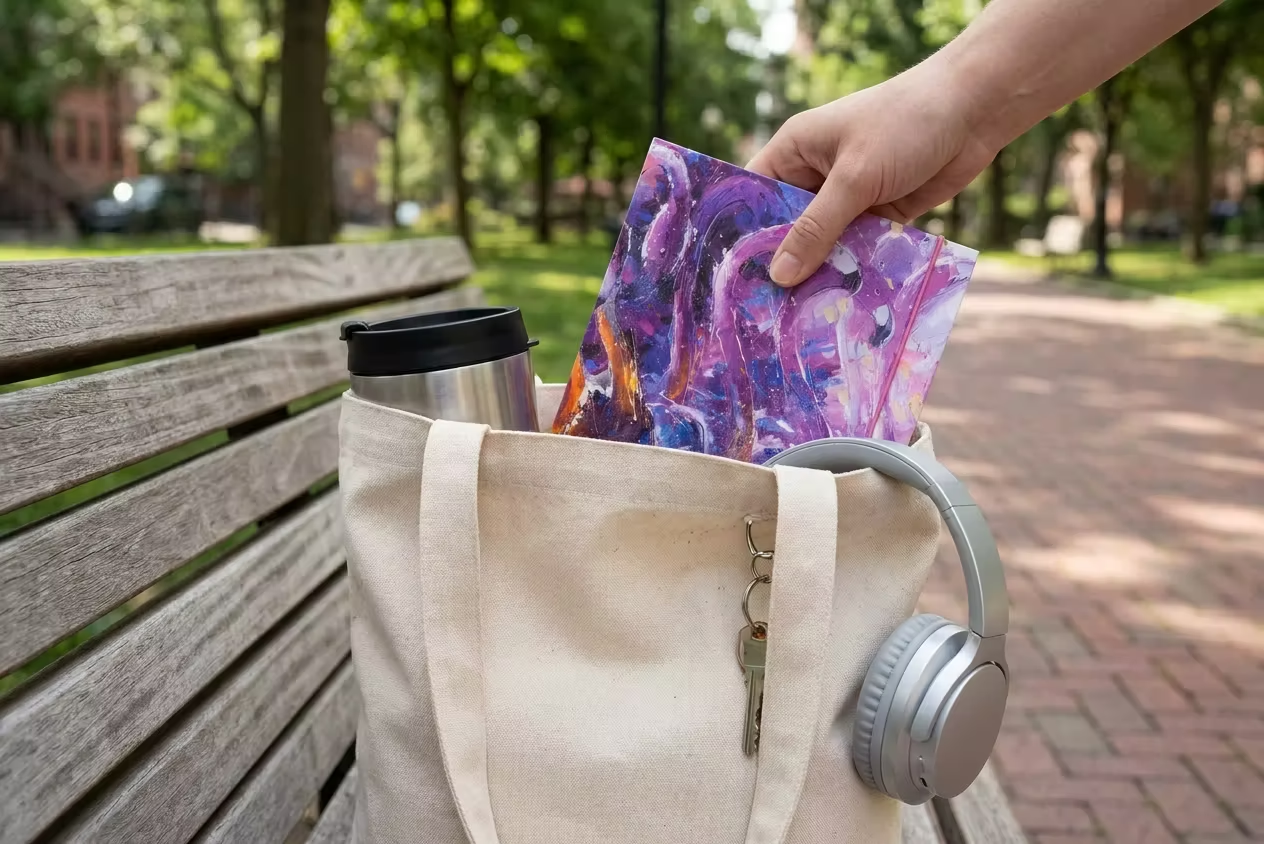
Sounds obvious, but the main condition for daily practice is that the sketchbook is always within reach. The one that lies at home on the table opens only at home. The one in your bag — everywhere.
Manuscript A5 Plus weighs about 400 g. It fits in the side pocket of most backpacks or in a carry bag. A hard cover protects the pages from wrinkling, and the elastic band keeps it closed — the corners and surface don’t suffer from being next to keys and chargers.
If it seems like the A5 Plus is too small for a “proper” drawing — try it for a few weeks. Most artists who moved from A4 to A5 say they started drawing more often specifically because the sketchbook became more accessible.
An open spread at 180°: why it’s critical for convenient sketches at home, in a café, and on the go
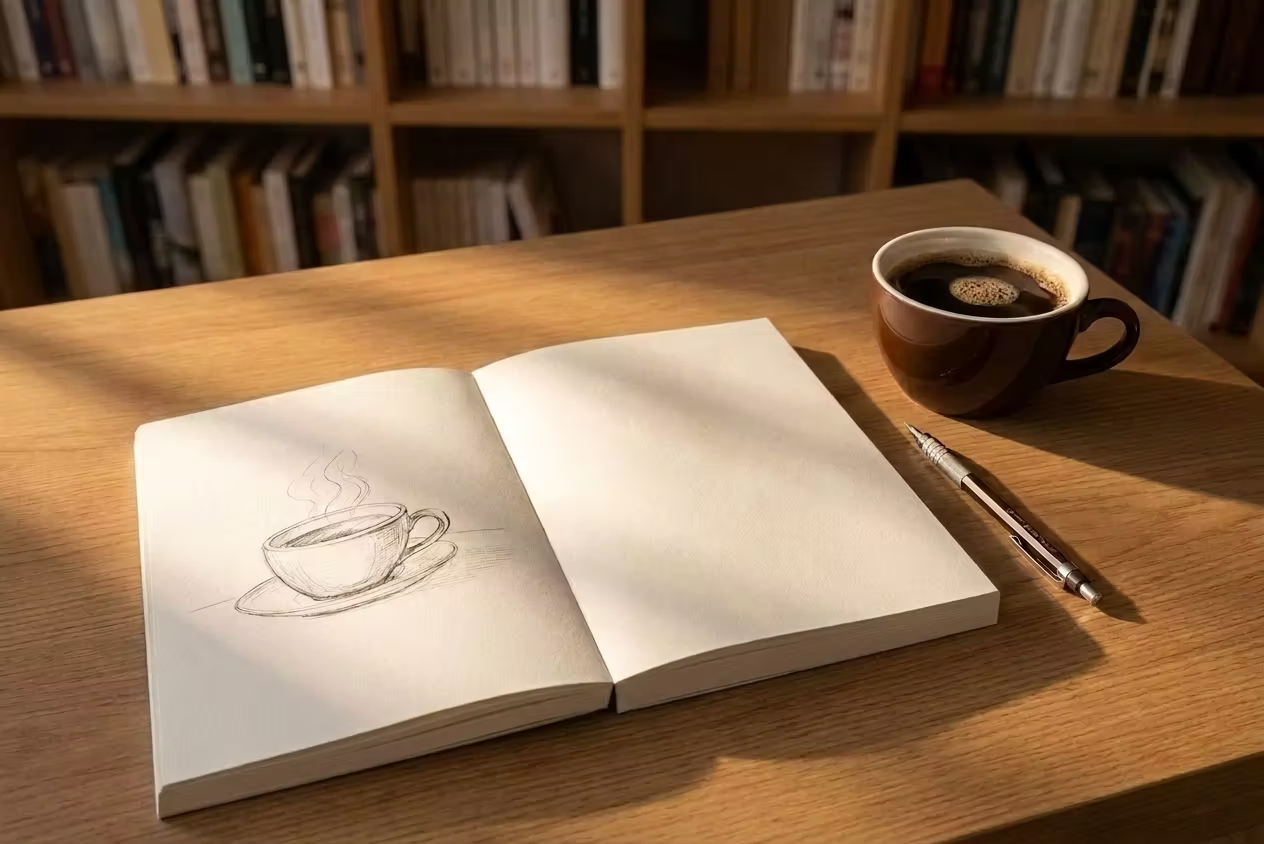
At home — the sketchbook lies flat on the table, both hands are free. In a café — you hold it in your left hand and draw with your right: the open binding doesn’t act as support, the page doesn’t “spring” back. Standing in transit — you hold and draw alternately with one hand: the sketchbook stays open without effort.
This isn’t a marketing detail. Try drawing something in a regular glue-bound notebook in transport or a café — and you’ll feel the difference within the first five minutes.
Simple exercises for 10–15 minutes every day
For beginners:
- Draw 5 objects in front of you. Don’t think about quality — just draw lines.
- 30 circles and 30 straight lines freehand. Boring, but your hand starts listening.
- Sketch textures: tree bark, fabric, the surface of a mug.
For a designer:
- A hand-drawn sketch of a UI screen — from any app you opened today.
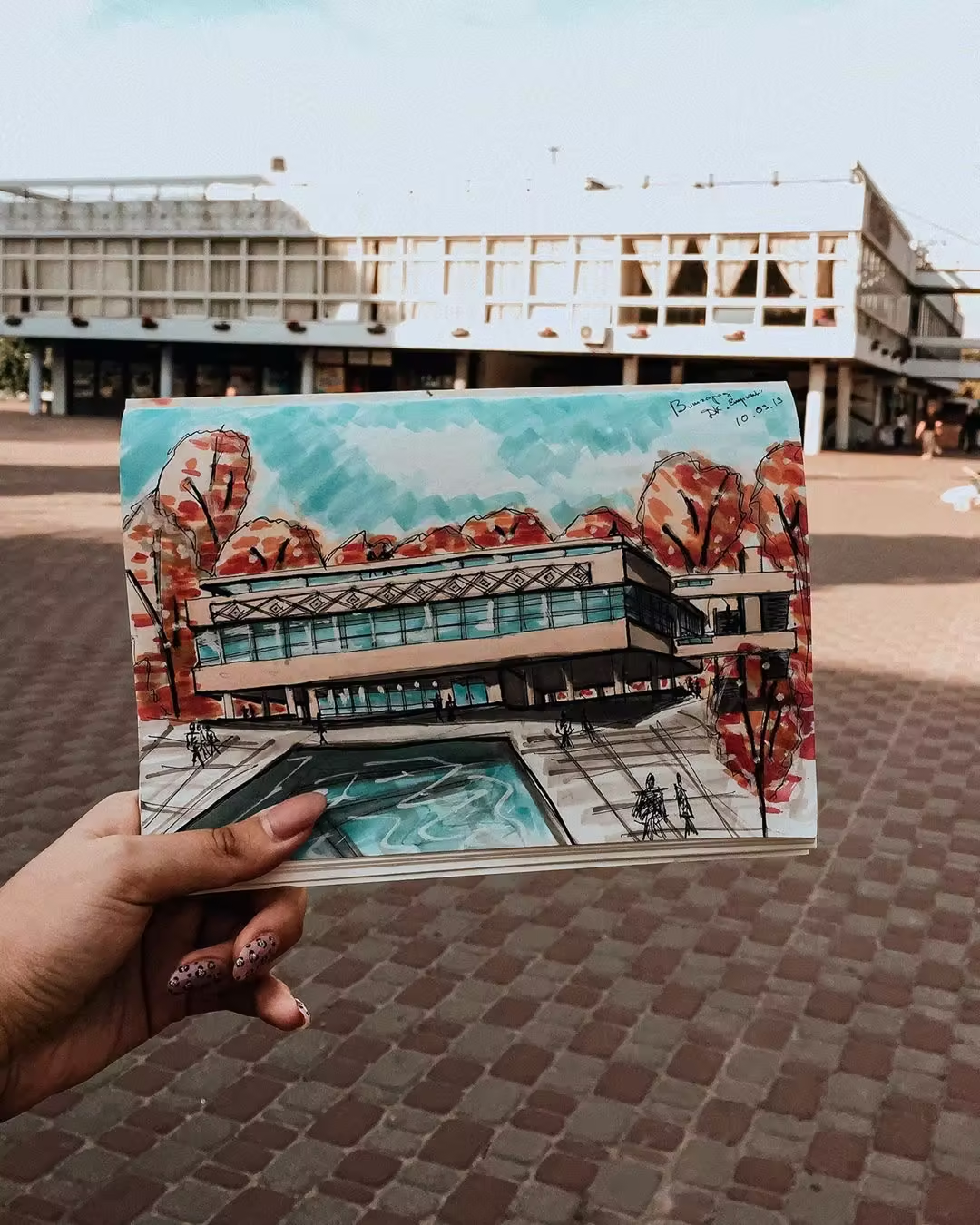
- A product sketch you saw on the street: packaging, a sign, an interior design element.
- Mindmap ideas across a spread: text + diagrams + small illustrations.
For an illustrator:
- A quick portrait of a person you see around you (5 minutes, no more).
- Sketch one detail from a reference — just the detail, not everything.
- Create a character in 3 minutes: silhouette, character, one clothing detail.
How to combine text notes, diagrams, and drawings in one sketchbook
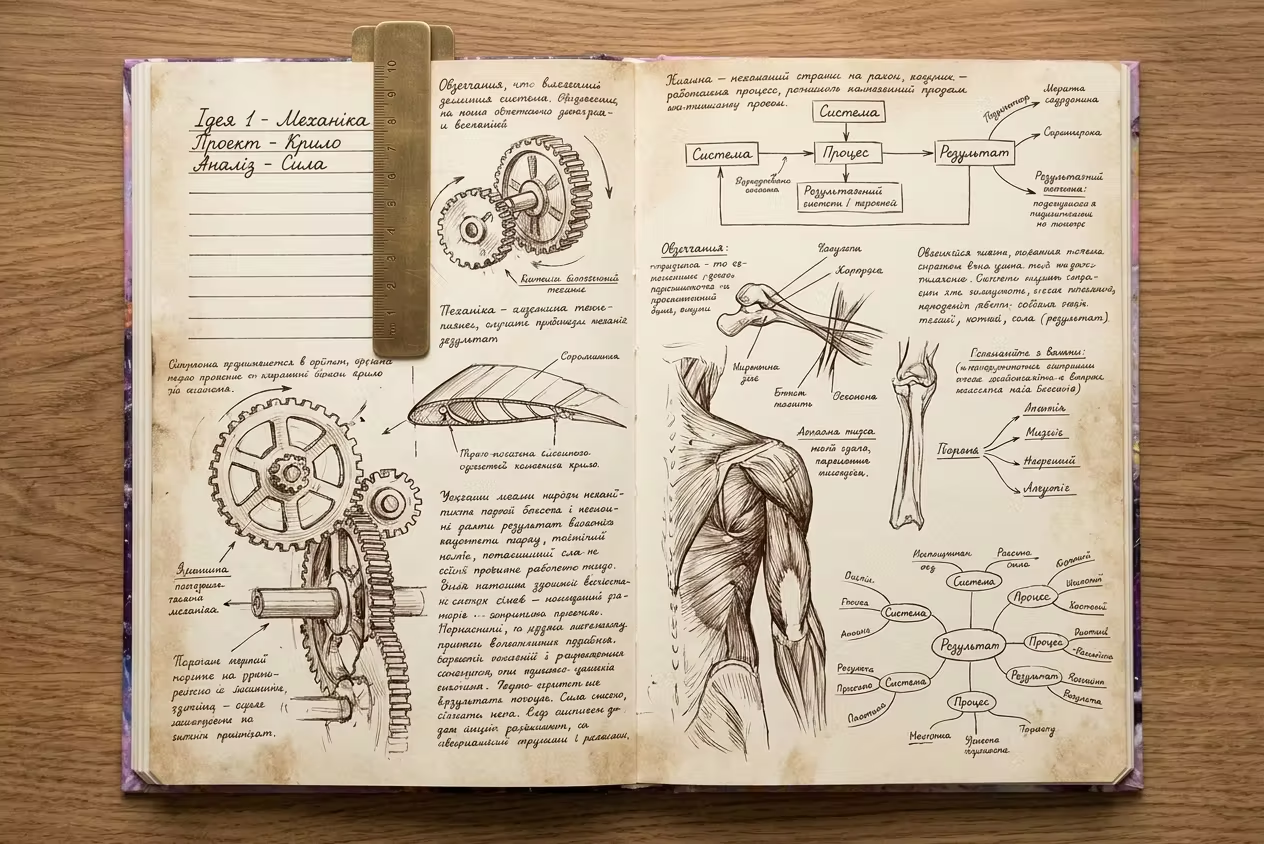
A sketchbook doesn’t have to be «just drawings». Some of the most interesting sketchbooks by artists are a mix of notes, sketches, diagrams, cut-outs, and annotations. Leonardo da Vinci filled his notebooks the same way.
One Manuscript A5 Plus spread — the perfect space for: left side notes or a list, right side a quick sketch or a diagram. Or the other way around. Or the entire spread as one big mind map. The ruler tab helps make even text margins when needed.
There’s no «right» way to keep a sketchbook. There’s only the one that makes you open it every day.
How to track progress: photos/scans of your work and stories with #manuscriptkyiv
One of the strategies that really helps you not to drop your practice is being public. Not in the sense of «showing perfect work», but in the sense of «capturing the process».
Photograph the spread after each session. Not for posting — just so you have a record. After a month, open the beginning and compare. The progress you didn’t notice day by day becomes obvious right away.
If you want to share — the hashtag #manuscriptkyiv on Instagram. There are works by clients at different levels, from beginners to professionals. A great place to see what Manuscript paper does in different hands.
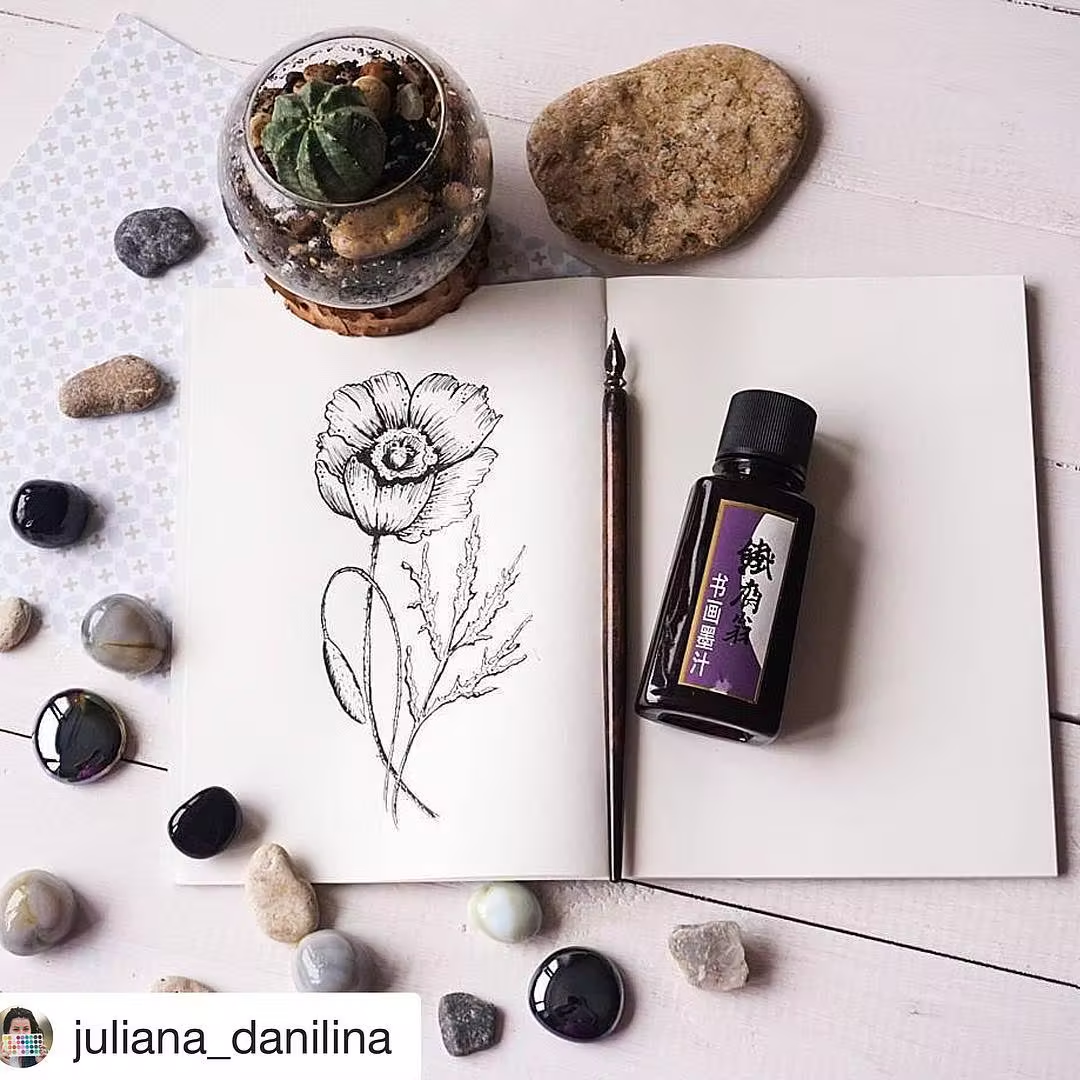
The open binding of Manuscript makes it easy to photograph and scan spreads: the page lies flat, there’s no shadow cast by the spine. To scan a page for your archive or post it in stories — 30 seconds.