

The sky you can’t just look at: Secrets of Van Gogh’s “The Starry Night”
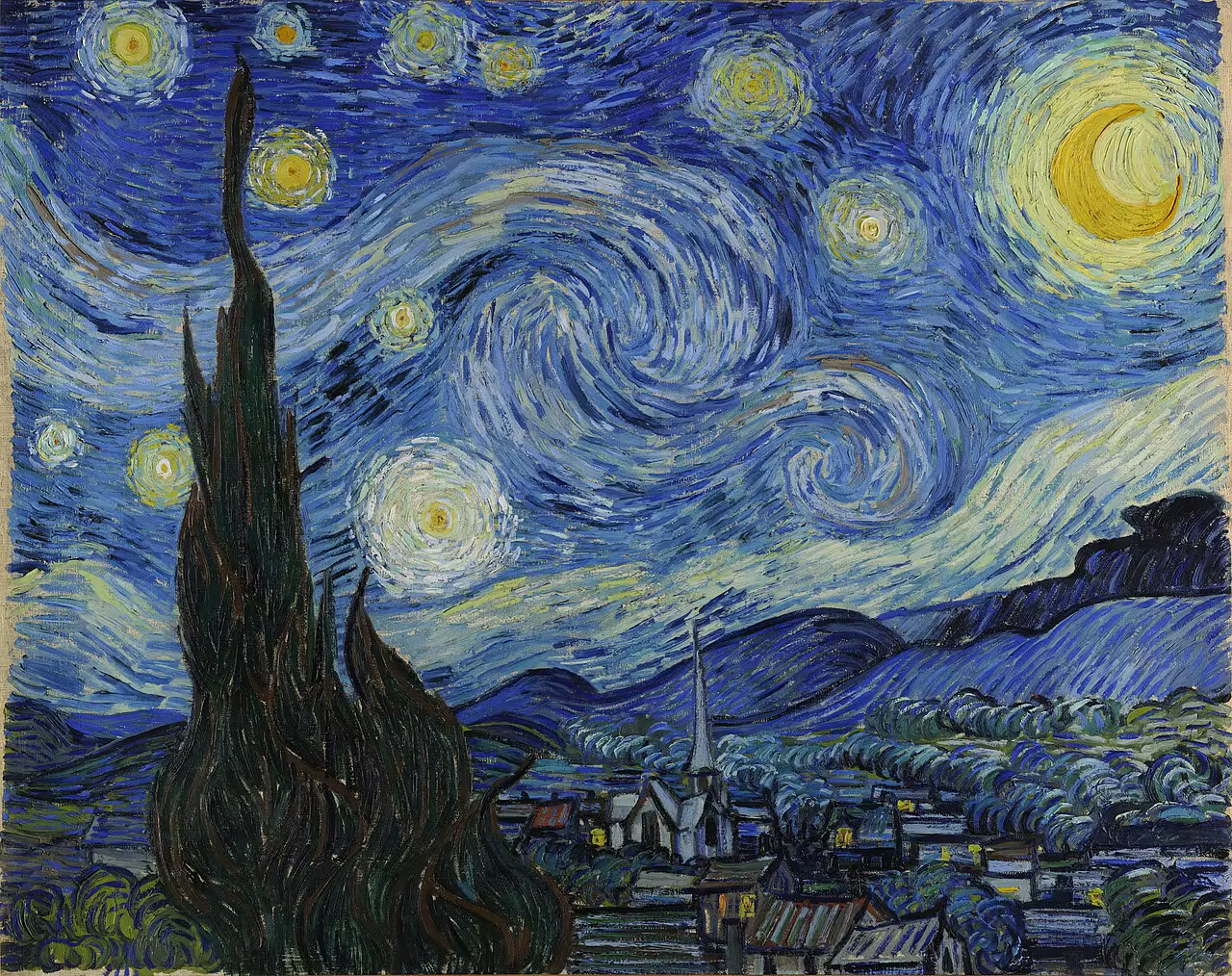
Spiral stars, a massive glowing moon, and a cosmic whirl over a small, quiet town. When we look at “The Starry Night,” we don’t see just a nighttime landscape. We see pure, concentrated emotion rendered in paint. Vincent van Gogh painted this masterpiece in June 1889 while in the mental hospital at Saint-Paul-de-Mausole in Saint-Rémy-de-Provence. It is not so much a night outside as within the artist himself—the most spectacular painting born from deep pain and absolute loneliness.
The psychological dimension: Freedom through bars
It’s important to understand the context in which this work was created. Van Gogh voluntarily entered the clinic after the well-known incident with his severed ear in Arles. At Saint-Paul-de-Mausole, two rooms were assigned to him: one for sleeping and the other as a studio on the ground floor.
“The Starry Night” is a view from the window of his bedroom, which faced east. But there’s one detail: the window had heavy iron bars. The artist couldn’t paint in that room. At night, he could only stand by the window, stare at the stars, make quick charcoal sketches in the dim light, and then, by day, go down to the studio and transfer this cosmic scale onto the canvas from memory. Paradoxically, the painting that symbolizes the absolute, limitless freedom of the universe was created by a man confined within four walls.
The anatomy of a masterpiece: What an artist should look closely at
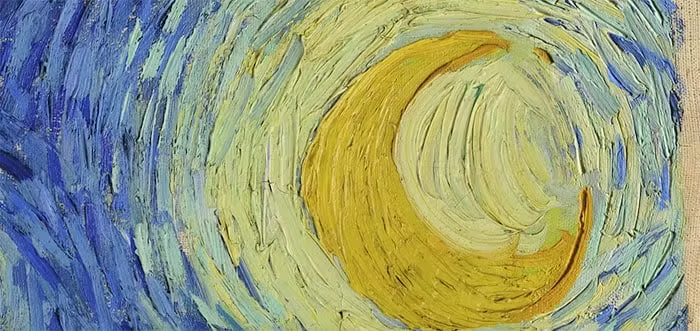
This painting is a monumental masterclass in working with composition, rhythm, and texture. Van Gogh uses impasto (applying paint in a thick, relief layer), which makes the canvas look almost like a sculpture. If we break it down into elements, we’ll see brilliant direction of attention:
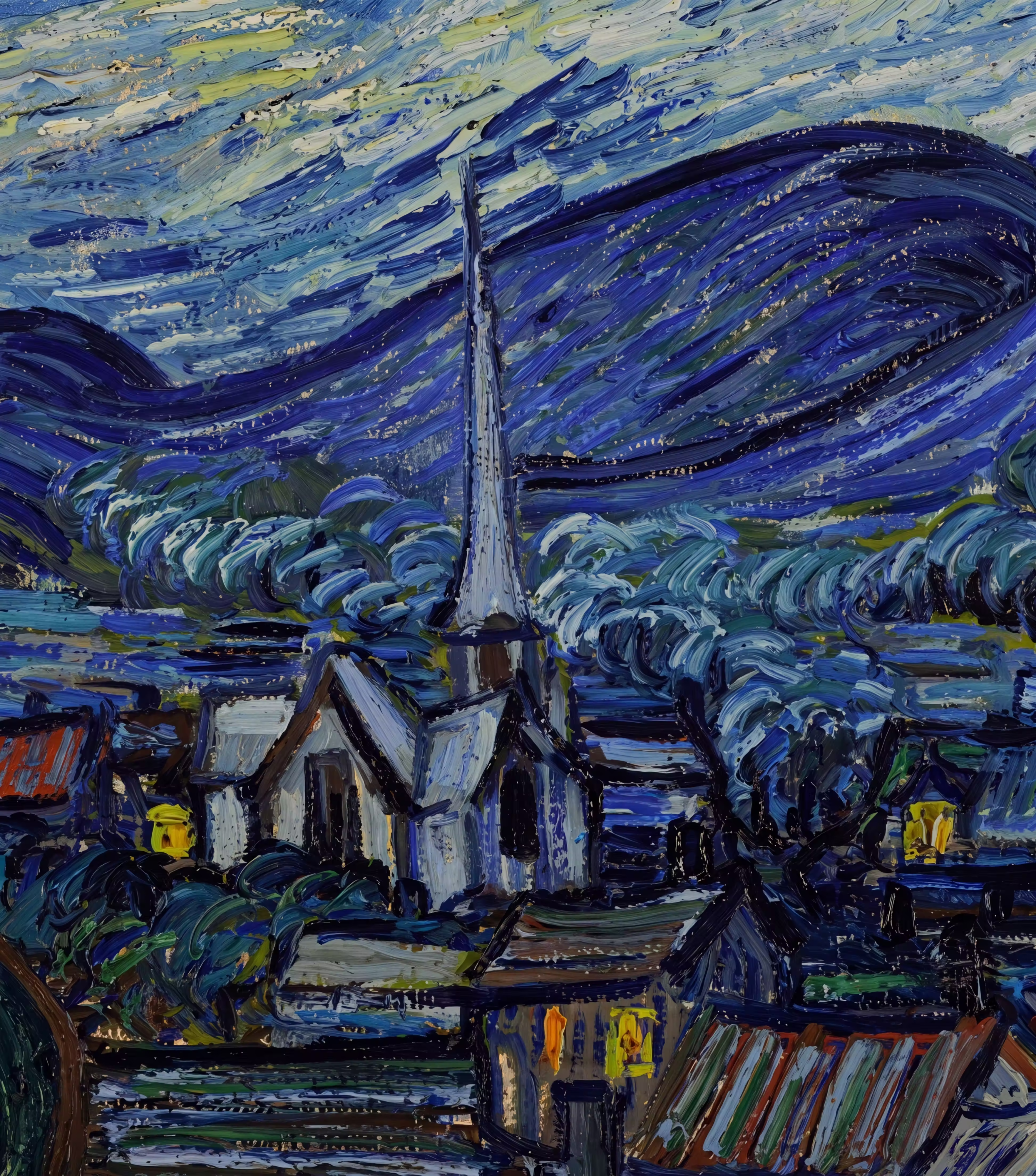
- Contrast of worlds (Calm against chaos): The buildings below are made of straight, rigid lines. They are static, geometric, and dark. And the sky above them is a pure, unstoppable whirl of curved lines. It’s the perfect visual embodiment of “objective reality” and the author’s turbulent inner world.
- An axis between earth and the cosmos: The dark silhouette of the cypress in the foreground breaks into the sky like a flame. In European tradition, the cypress is a cemetery tree, a symbol of death. But here it serves as a kind of bridge connecting heavy earth with the pulsating energy of eternity.
- Overtly amplified light: The stars and the moon are unimaginably enlarged, each with its own glowing halo. Van Gogh literally emphasizes the importance and hope of light in the darkest times.
Color palette: The battle of blue and yellow
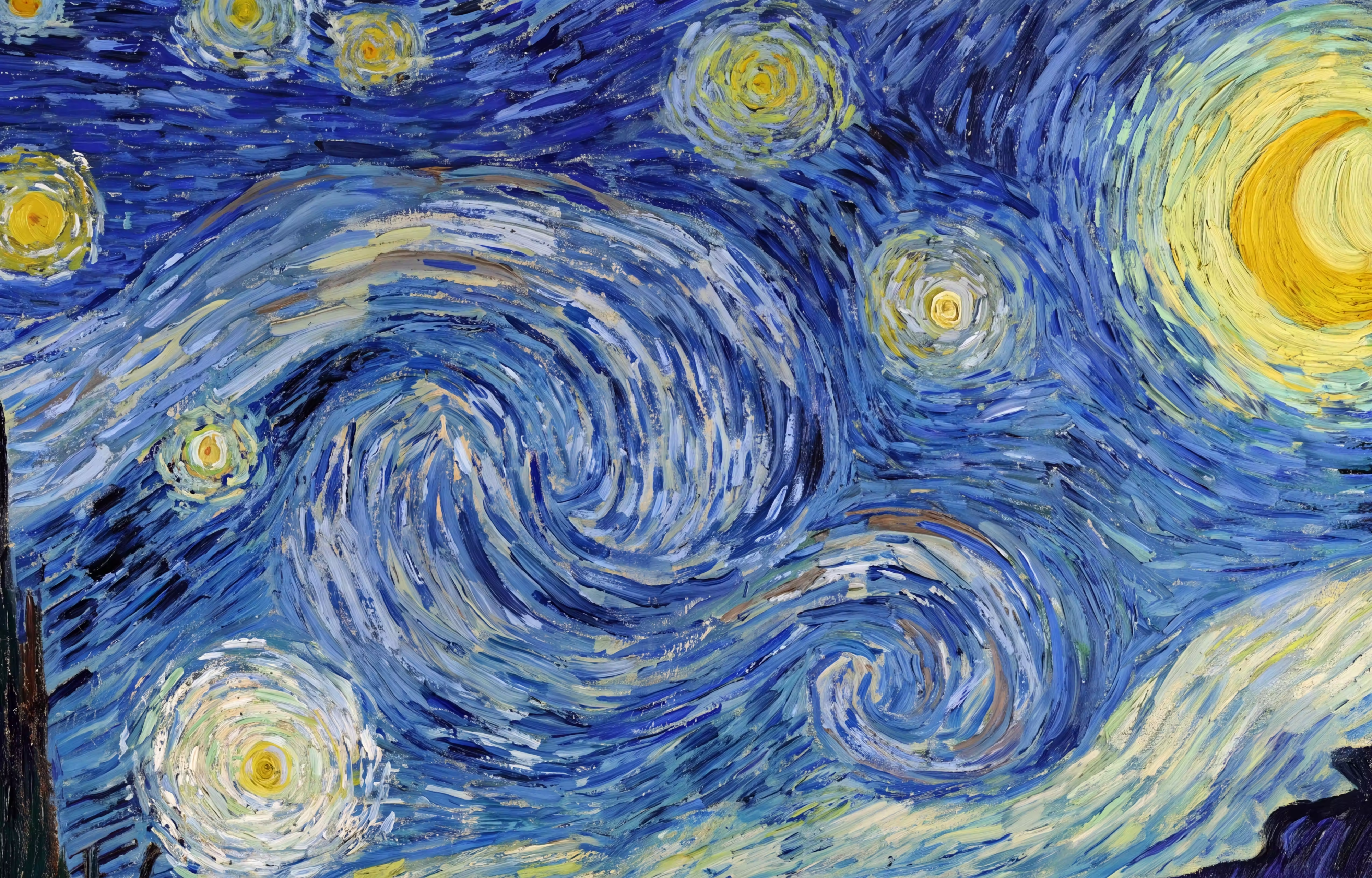
The magic of the painting is in many ways built on the laws of coloristics that Van Gogh studied among the Impressionists, but then took to the absolute. He uses simultaneous contrast—an effect where opposite colors on the color wheel (blue and yellow/orange) intensify each other’s brightness when placed side by side.
For the night sky, he used the deepest pigments of his time: cobalt blue and ultramarine. And for the stars and the moon, he used Indian yellow and zinc yellow. When these thick brushstrokes meet on the canvas without smooth blending (a gradient), the viewer’s eye can’t focus on a single color, creating an optical illusion of shimmering and vibration. The painting literally “glows” from within.
Science and mysteries: A fact that few people know
- Van Gogh himself considered the painting a failure. In letters to his brother Theo, he wrote about the paintings of that period and noted that “The Starry Night” had nothing to say to him, calling it a step back toward romanticism and stylization. The artist didn’t even send it to his brother with the first batch of works from the clinic.
- Accurate astronomy. Researchers at the Griffith Observatory confirmed that in spring 1889, Venus was extraordinarily bright in the sky over Provence. And the very largest, dazzling white star to the right of the cypress is the morning star (Venus) that the artist saw before sunrise.
- Dutch nostalgia. The town we see at the bottom is something Vincent never saw from his window. He compiled it from various memories, and the sharp church spire was drawn in the traditional architectural style of his homeland (the Netherlands), not France.
- Mathematical precision of turbulence. In 2004, physicists compared the sky swirls in the painting with a mathematical model of fluid and gas turbulence (the Kolmogorov theory). The results were astonishing: in a state of psychosis, Van Gogh somehow intuitively depicted ideal mathematical turbulence, which is one of the most complex concepts in physics.
“I know nothing for certain, but the sight of the stars makes me dream. Why should these bright points in the sky be less accessible to us than the black points on the map of France? Just as we board a train to go to Tarascon or Rouen, we accept death in order to set out for a star.”
— Vincent van Gogh (from letters to his brother Theo)
What this masterpiece gives a contemporary artist
If you draw or are interested in illustration, “The Starry Night” can become a practical guide for you. Here are the lessons you can take from it:
- Emotional distortion: Scale and form must serve the idea. You can boldly distort proportions, stretch the trees, or inflate the stars if it helps convey a feeling rather than mere photographic accuracy.
- The background as the main character: The background doesn’t have to be a silent decoration. For Van Gogh, the sky is the main acting character of the painting—it dictates the mood and captures the viewer’s attention.
- Stroke rhythm creates motion: Instead of a solid color fill, use directed lines or brushstrokes. This will make the viewer’s eye literally “glide” across the drawing in the direction you set.
- Light in shadow: Night is never simply black or gray. It can vibrate with ultramarine, cobalt, and emerald if your task is to show the living energy of sleep.
Try to catch this expressive rhythm of brushstrokes in your own sketchbook! Set the eraser aside and try working directly on the final page: with a liner, ink, or thick acrylic/gouache.
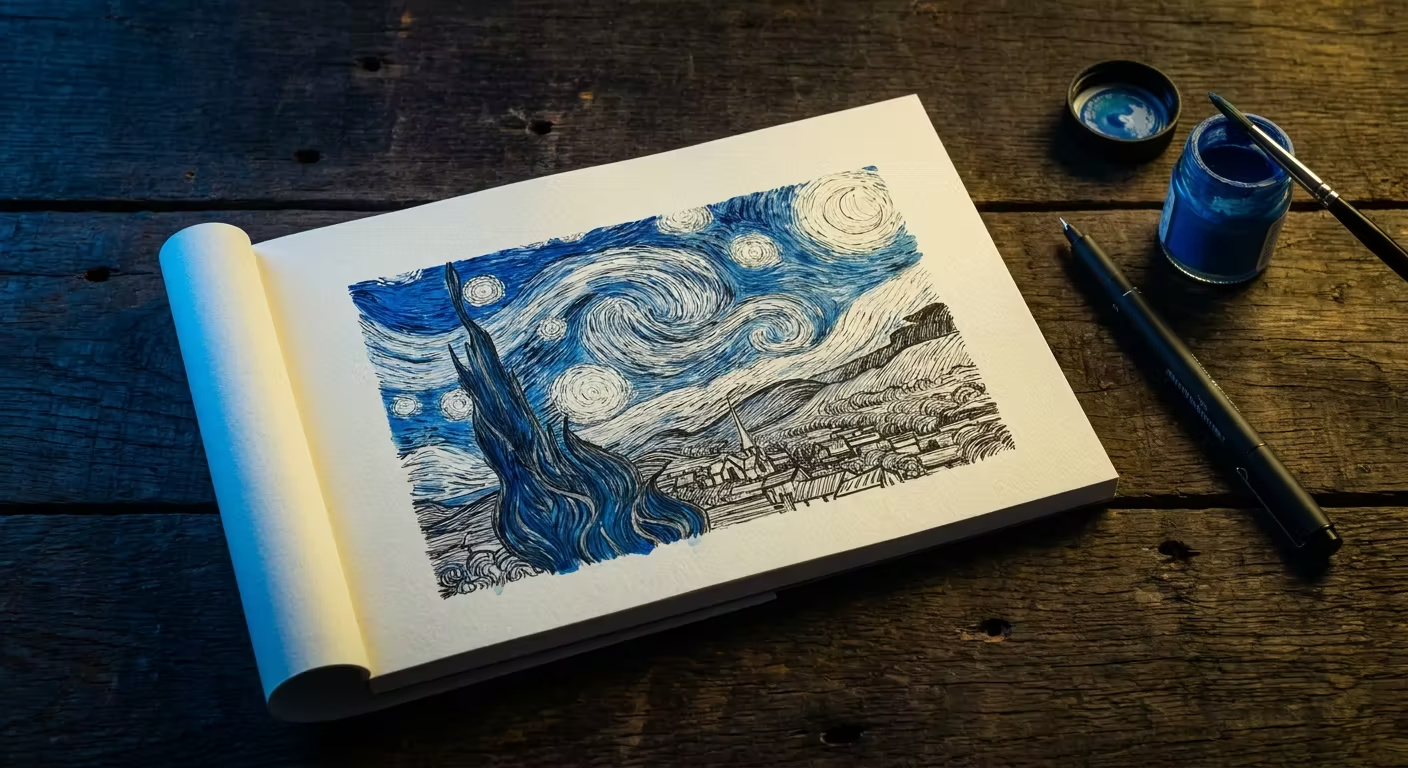
For such intense techniques, you need paper that can handle pressure and moisture. Manuscript Plus sketchbooks with dense creamy paper (150 g/m²) provide deep, rich line saturation, enhance the contrast of blue or black ink, and most importantly—no drop will bleed through to the other side. An ideal canvas for your own “Starry Night”!