

We prepared this article based on Danny Gregory’s personal experience—an artist, author of books, and the founder of SketchBook Skool, which he shared in his YouTube video. Danny has been keeping sketchbooks for over thirty years, and these words are not theory. It’s living experience, packed with his own mistakes.
In thirty years, Danny Gregory filled about two hundred sketchbooks. Some all the way to the last page. Some he abandoned on the third spread. Some he truly hated—with all that, he kept coming back to them again and again. Here’s the conversation he wishes he could have had with himself at the beginning—about blank pages, about fear, about why you should even draw the everyday boredom, and why the sketchbook you hated the most turns out to be the most valuable of all.
Danny has always loved looking through other people’s sketchbooks.
These pages where watercolor stains live, tiny maps, traces of coffee cups, crossed-out lines, hurried breakfasts scribbled down in a rush, worn-out shoes, sleeping cats, and the landscapes from a train window. For him, it’s documentary evidence of life. Proof that a person wasn’t just drifting through days, endlessly scrolling through a phone feed, but really was here. Looking. Noticing. Leaving traces.
But when he himself was just starting out with notebooks, he didn’t understand this at all.
His first pages were stiff. He planned every stroke, worried, erased, drew again—and in the end, got something dead. Technically neat, but without a drop of anything living. He tried to impress—and that’s exactly what ruined him.
Thirty years later, Danny shares with us what he learned. Not from the height of a master—but from the experience of a person who made almost every possible mistake and learned to love them.
1. A sketchbook isn’t a place for good work. It’s where you find it
When we look at published art books by famous artists—even the ones Danny himself published at the time—it seems like every one of their pages is genius. As if the artist simply opened a notebook, and the hand automatically produced something perfect.
That’s a lie. Beautiful, but a lie.
It’s the same illusion that makes us think: a musician sits down at the piano—and immediately comes out with a studio hit. But behind every hit are thousands of failed rehearsals. Behind every “genius” page are dozens of crossed-out, crumpled, ink-smeared earlier attempts.
A sketchbook exists to make things you don’t like. To make mistakes—and through mistakes to find something real. A spilled ink bottle, a pen that leaked at the worst possible moment, a perspective that “went off”—all of that often becomes the most interesting part of the drawing. Art is born from quirks and mistakes—not from flawless control.
Danny spent years trying to control every stroke. And only when he stopped, drawing became interesting.

2. Nobody’s looking. Seriously—no one cares
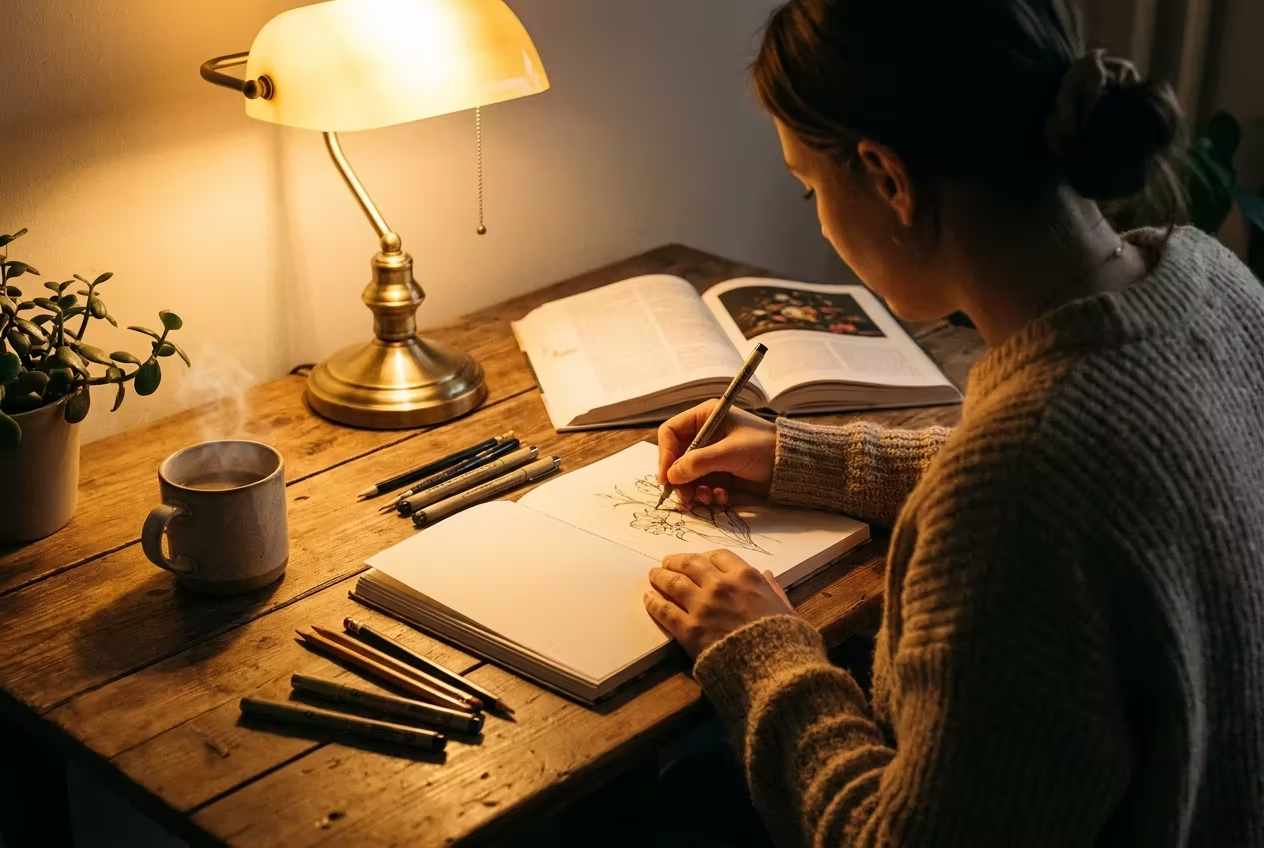
Danny remembers this horror of staring at a blank page. He tried to plan everything in advance, was overly cautious, kept erasing what he’d drawn. In the end—dead drawings and complete lack of satisfaction from the process.
Do you know where the fear of a blank page comes from?
It feels like there’s a crowd of judges standing behind our back. Teachers from the past, people we want to impress, imaginary critics with snobbish eyes. We draw—and at the same time protect ourselves from their judgments.
But the reality is this: it’s just a notebook. You can close the cover—and nobody in the whole universe will look inside. This is your safest place. Safer than a diary, safer than notes on your phone—because here you leave behind not words, but living feelings. And those feelings are only yours.
Let yourself be a bad artist on the pages of your sketchbook. That’s the only way to become better.
3. There’s no such thing as boring. Your ordinary—this is the best story
As a teenager, Danny constantly thought: “What should I draw so that it matters?” He drew David Bowie because “people will definitely be impressed.” He tried to make a “powerful statement about our time.” He searched for “worthy topics.”
He wasted a lot of time on all that for nothing.
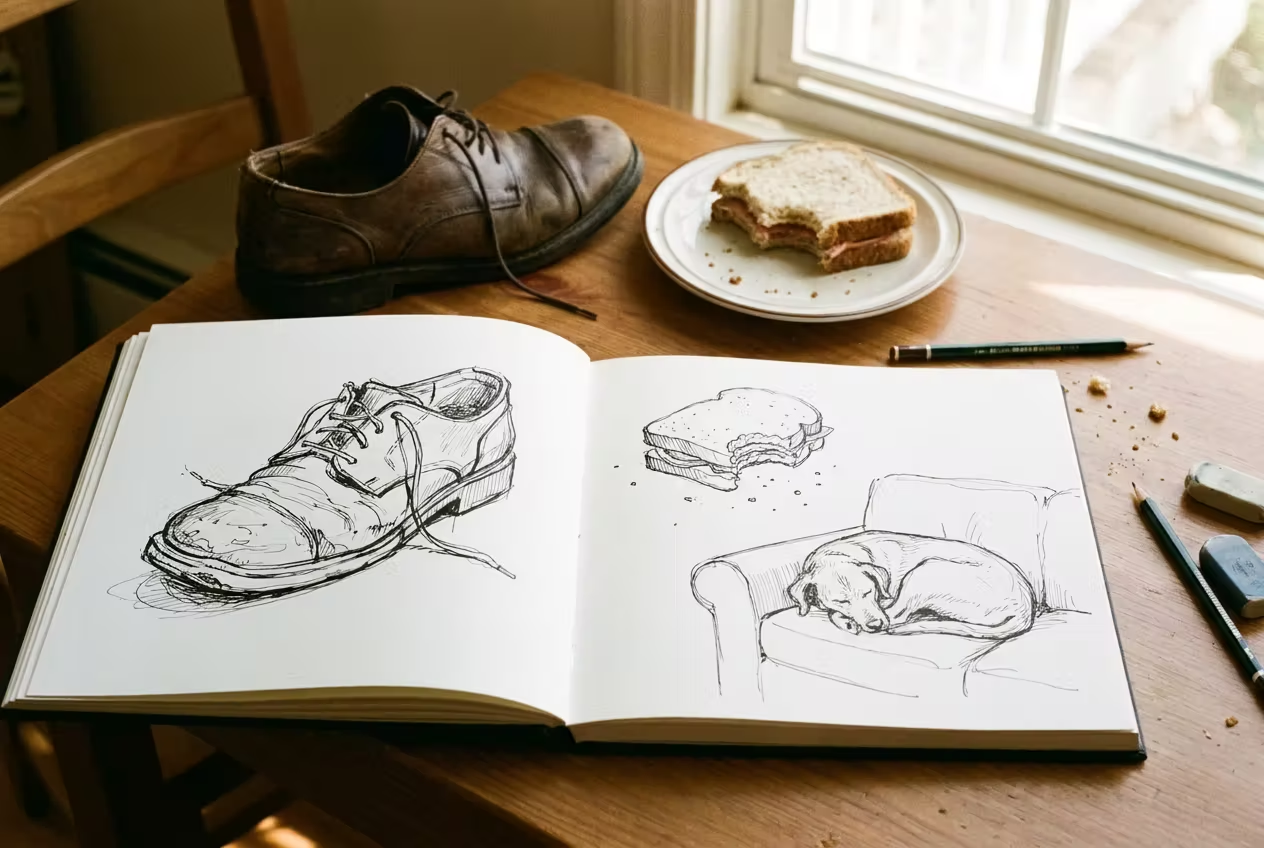
His main story is his own life. Half-eaten sandwich. A sleeping dog on the sofa. The neighboring building he sees every day from the window. Things that have been in his line of sight tens of thousands of times.
Drawing your old shoe and passing along the kilometers you’ve walked through all its scuffs—that’s what really matters. Not as an art object, but as an act of attention to your own life. Drawing teaches seeing—how morning light falls on a coffee cup, how the shadow of a tree moves across the wall throughout the day, what your hand looks like when you write.
That makes life conscious. Not in some “elevated” or “spiritualized” way—just alive.
4. Your drawings are a time machine
Photos on your phone are great. But a sketchbook goes deeper.
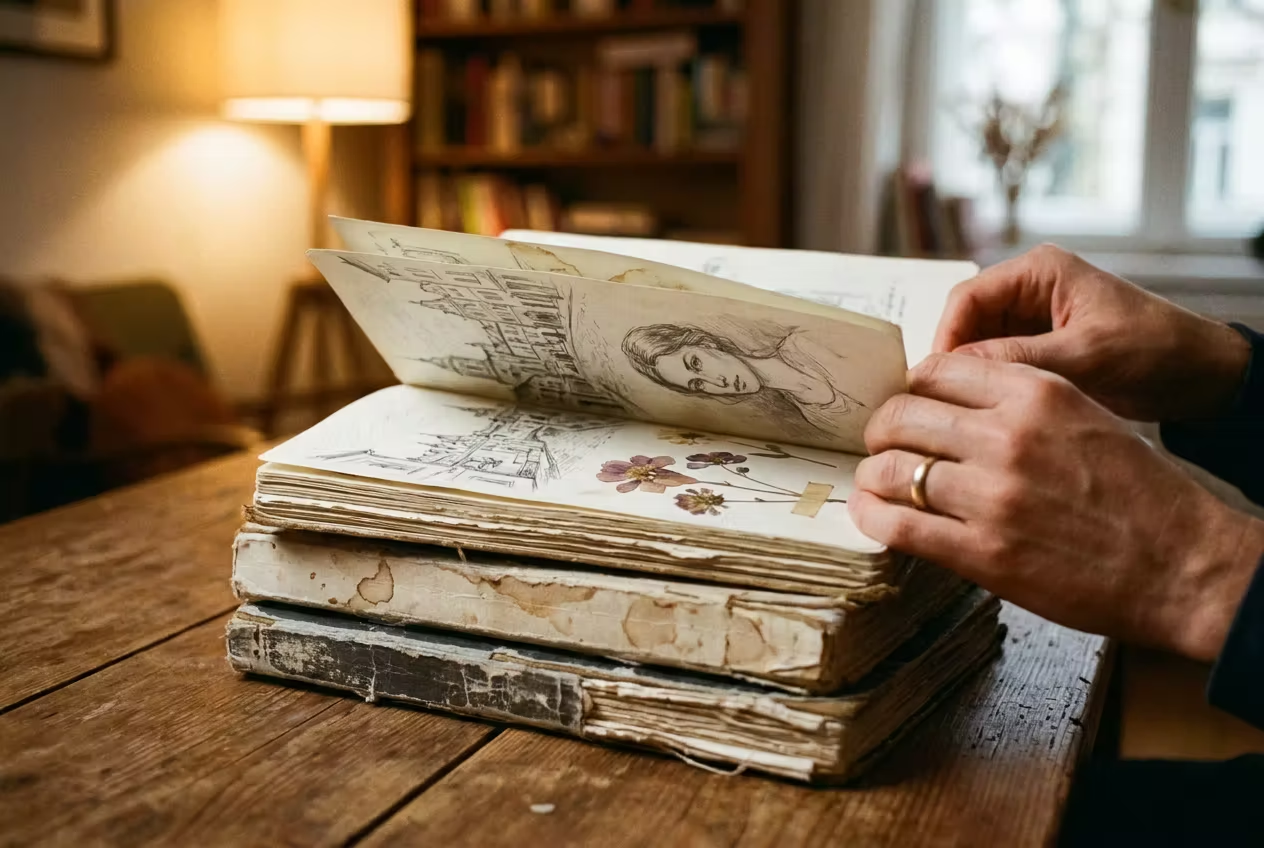
When you flip through old sketches, you’re not just seeing an object. You’re bringing back the feelings of that moment. The smell of that café. The fatigue after a long day. The ease with which you looked at the world back then—or, on the contrary, the anxiety that lived in every stroke.
You relive the time that would otherwise just slip through your fingers.
A sketchbook becomes your psychological self-portrait. Looking through his old notebooks, Danny can say exactly this: here he risked and enjoyed it. Here it hurt him. Here something was overflowing from the inside, and he barely had time to jot it down. Through the strokes on paper, he reads himself—the version he was, not the one he remembers.
It’s more precious than any photo.
5. A failed page can always be saved. Or simply turned
If he doesn’t like what comes out, he has two options.
First: turn the page and start over. And that’s normal. It’s not a defeat—it’s a break in the clouds. A sketchbook full of blank pages and fresh possibilities. Every new spread is a new chance.
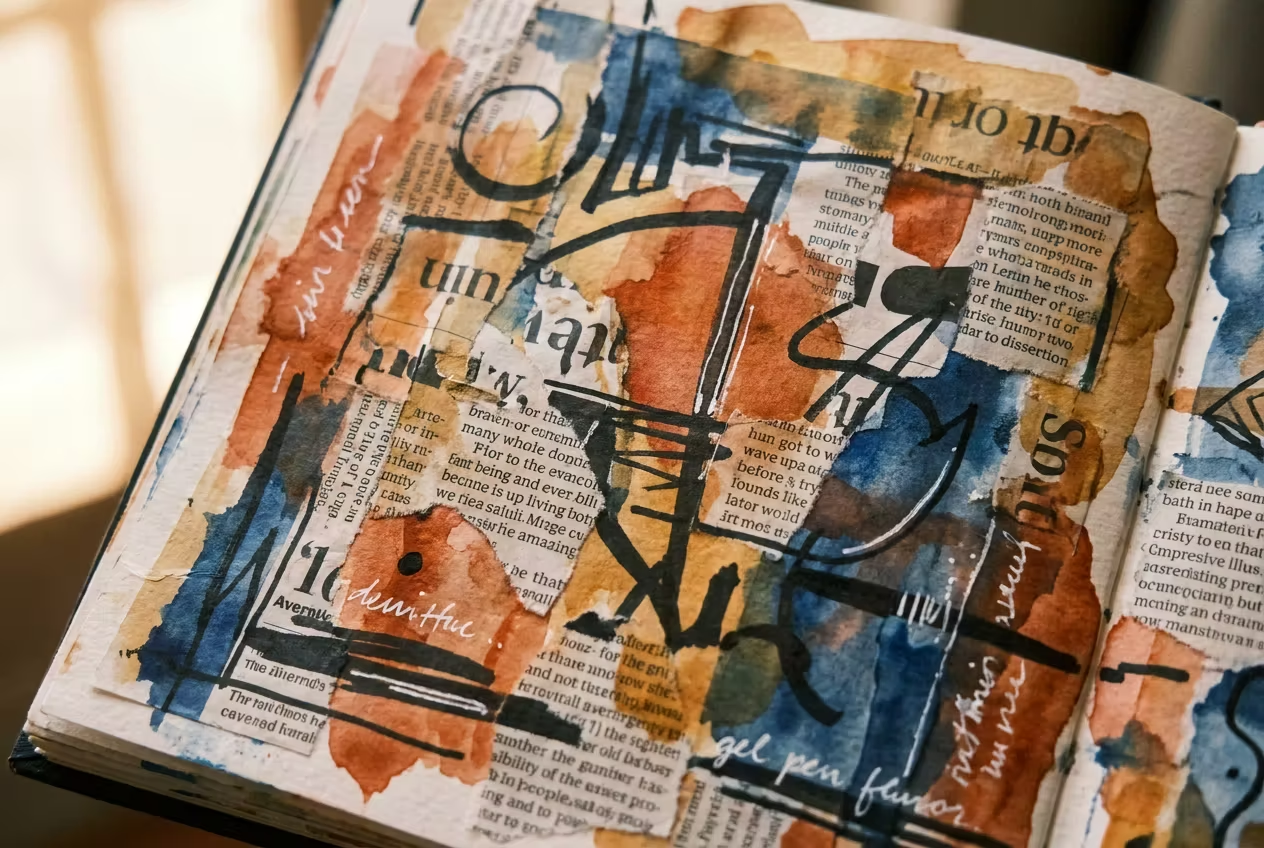
Second: make it worse. Intentionally. Add more watercolor, glue a snippet of newspaper on top, cover it with markers, pour coffee over it. Stack the materials until it’s unrecognizable. Sometimes, that’s exactly how something unexpected and alive is born.
And sometimes you return to the “ruined” drawing a year later. You take a white gel pen, put down just one tiny highlight—and the drawing suddenly comes to life. The previous version left behind raw material so that the current version could work with it.
A sketchbook is a dialogue between different versions of yourself.
6. Just make it a habit. Not a ritual—just a habit
Drawing shouldn’t be a “big artistic act.” You don’t have to wait for inspiration, the right mood, perfect lighting, or a free evening. For Danny, it’s simply what he does. Like brewing coffee, brushing your teeth, taking the dog for a walk.
Did free five minutes appear? He takes out a sketchbook. Watching a series? He draws. Waiting in a line? He draws. Talking to a friend at the table? He draws—and listens to them better than if he were just sitting there and nodding.
No rules. No curriculum. No “correct” sketchbook or “correct” material. On one page, a lovely flower, a burnt piece of toast, and a monster from a nightmare can all live together—and it will be the perfect page.
How to start right now?
If you’ve never done this—or you stopped halfway and haven’t opened a notebook for years—the recipe is simple.
Open your sketchbook on any page. Even in the middle. Even on the one that’s already “ruined.” Take a pen—and simply start moving it across the paper. Right now. Everything else you’ll figure out along the way.
Just like Danny started once.
He’s just a person who’s been doing this for a very long time. And one day you’ll become that kind of person too—if you want to. Trust me: you’ll like it.
Material prepared based on Danny Gregory’s video on the YouTube channel.