

Grid paper imposes its own layout. The line dictates the spacing. But a blank page isn’t a lack of structure—it’s a chance to create your own. We’ll tell you how to stop “sliding” your lines and make your notes neat without any guide lines.
Why a blank page isn’t chaos
Most people think that writing evenly is impossible without a ruled foundation. In reality, the problem isn’t the paper—it’s the absence of a system. A good blank page gives you freedom: you decide where the heading goes, where the margin is, and where the spacing goes. That’s why most designers, architects, and writers choose blank paper.
How to Keep Lines Even: 3 Practical Techniques
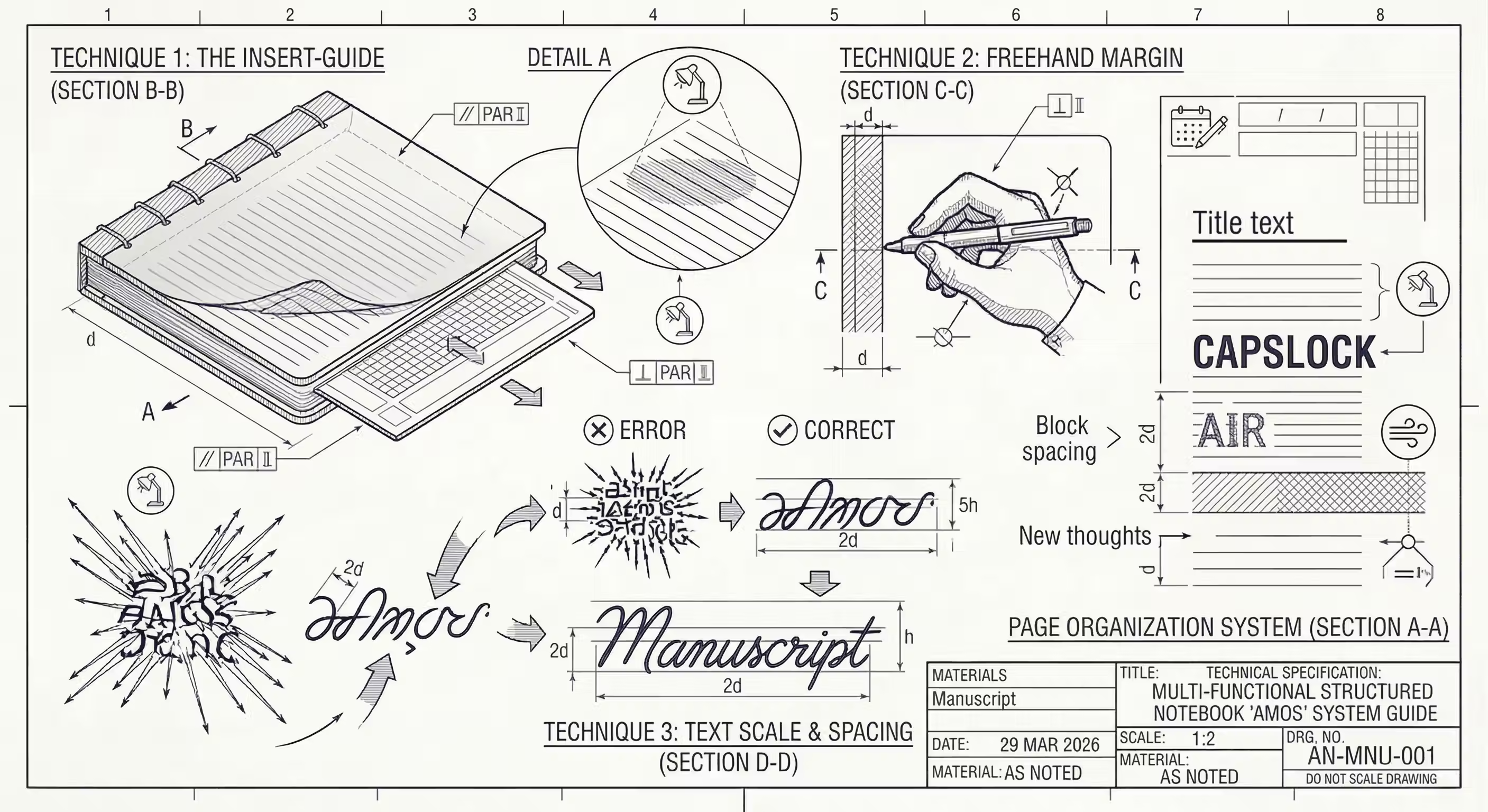
- Underliner insert — a grid or lined sheet is placed under your page. The lines show through the paper and provide guidance without leaving marks. That’s exactly why Manuscript notebooks have an insert.
- Margins drawn by hand — right after opening the page, draw a single vertical line on the left (2–3 cm). This will set the start of your line and automatically align your text.
- Larger handwriting + line spacing — smaller text is harder to control. Try writing a bit larger with a noticeable interval—your lines will become even on their own.
How to Organize Your Page: a Simple System
A neat note isn’t only about straight lines. It’s about structure on the page.
- Date + topic—always in the top-right corner
- Emphasize headings with underlining or ALL CAPS, not another font
- Spacing between blocks—1–2 lines, no less
- New thoughts—on a new line, always
White space on the page isn’t wasted paper. It’s the breathing room that makes your notes readable.
Lined and grid insert: why it’s included in Manuscript notebooks

Each Manuscript notebook has a removable insert—on one side there’s a line, on the other there’s a grid. Place it under your page and a blank sheet becomes manageable. You don’t need to buy a separate underliner or search for a ruled guide. Slip it into any notebook from the series, shine a lamp on it, or work near a window—the lines show through even thick paper.
5 Habits for Neat Handwriting on a Blank Page
- Start your page by defining the margins—30 seconds that change the whole look
- Write slower than you think—speed destroys handwriting, not grid lines
- One line = one thought: don’t pull the sentence into the next line unless you’re finished
- Hold your pen loosely—tension in your hand distorts letters
- Review the page after you finish—one minute of editing builds a habit
Frequently Asked Questions
Can I write neatly on a blank page without an underliner?
Yes. Simply mark the left margins and keep an even spacing between lines. With practice, your lines will align automatically.
What paper is best for neat writing?
Manuscript notebooks use 90, 120, and 150 gsm paper.
For neat writing, the best choice is dense, smooth paper in a creamy tone—it reduces contrast and eye strain. The main advantage of this paper is its special surface treatment, allowing your pen to glide gently while keeping a crisp contour of each letter without ink spreading. The choice of weight depends on your tools:
- 90 gsm — ideal for everyday notes and lists; the paper is light, and ballpoint pen ink dries instantly on it.
- 120 gsm — a premium balance for fountain pens and rollerballs; high opacity lets you write confidently on both sides of the page.
- 150 gsm — maximum stability for creativity; it holds a line perfectly when working with brush pens, ink, and art markers.
This approach to choosing weight ensures the paper won’t “feather” or absorb too much moisture, making your handwriting look more tidy and professional.
That said, we always emphasize that there is no single ideal—and doing what you like most is always right.
How is a grid insert different from a lined insert?
The grid is convenient for diagrams, tables, and for people who need to control both horizontal and vertical alignment.
The line is for text notes and journals. Both options are available in Manuscript inserts.
With an insert, you’ll write and then everyone will admire how evenly you write =)
Is a blank page suitable for learning?
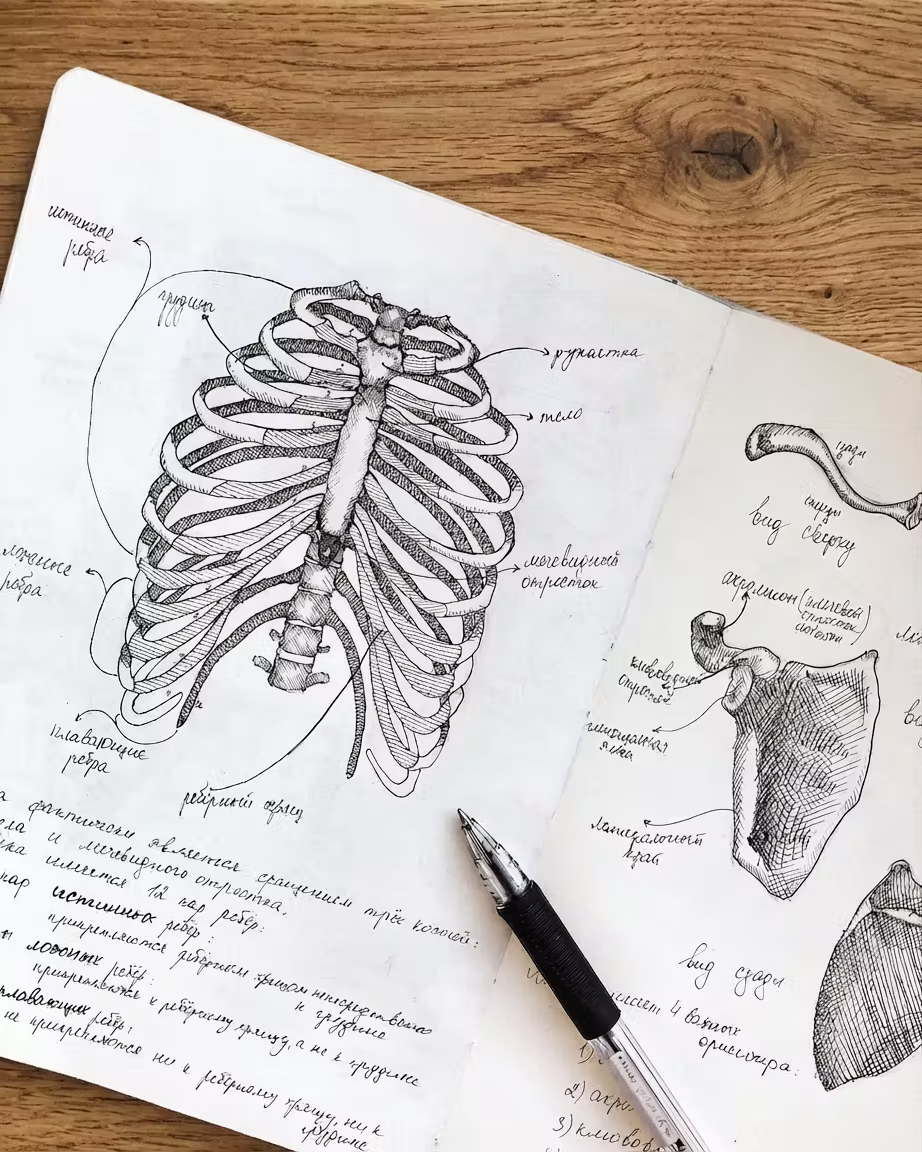
Yes, especially for notes: you decide the page structure yourself—it’s easy to combine text, diagrams, and drawings without limitations from a ruled base, which in turn adds visual noise once the notes are written and doesn’t distract you when you reread them later.