

Bosch “The Garden of Earthly Delights”: three panels — three dimensions of reality
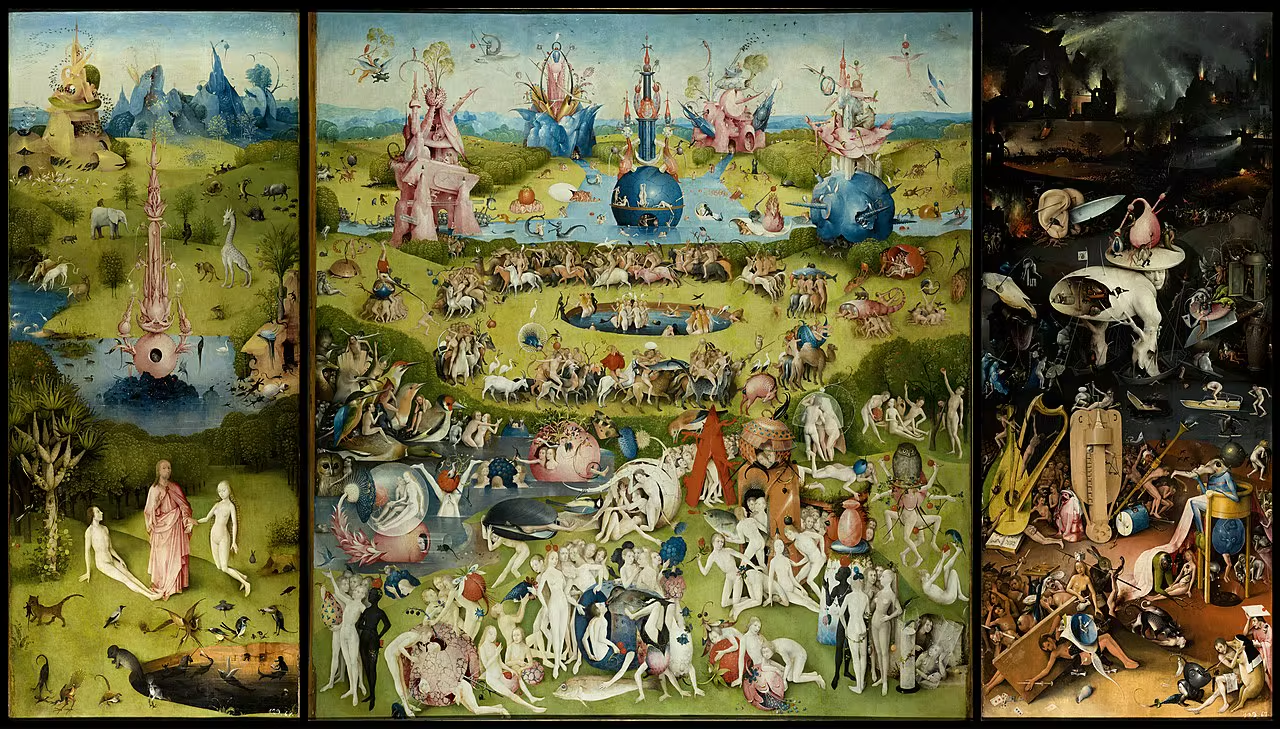
Hieronymus Bosch created this triptych in the early 16th century (around 1490–1510) — and to this day, no art historian can fully decipher all its symbols. “The Garden of Earthly Delights” is not a painting you simply look at; it’s a painting you wander through: every inch of the surface hides a new detail, a new riddle, a new answer to a question you haven’t even had time to ask.
The story of its creation: a worldly comic for the aristocracy
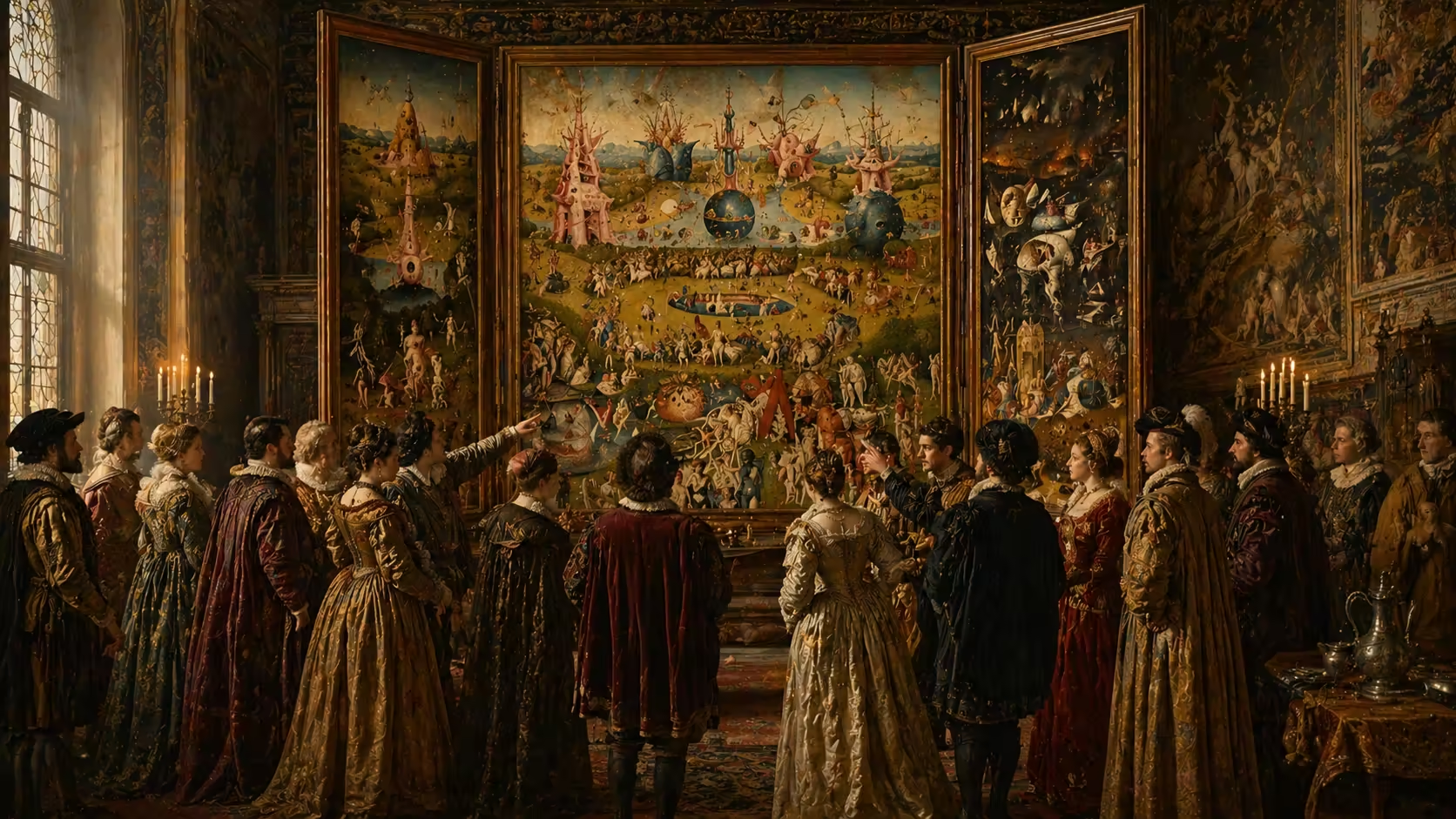
Although the triptych looks like an altarpiece (a format traditionally used in Catholic churches), it was never placed in a temple. Most researchers believe the painting was commissioned by Engelbert II of Nassau or his nephew Henry III — influential nobles who loved gathering the intellectual elite at their palace in Brussels.
This triptych served as a kind of “interactive film” or an elite puzzle for guests. They stood before a huge painting (almost 4 meters wide when opened) and spent hours discussing the hidden meanings, allegories of sin, and philosophical jokes concealed among thousands of figures. That explains Bosch’s unprecedented freedom of imagination: his worldly patron allowed him to do what the Church could have condemned to the stake.
What is worth looking at here
- Closed shutters — the birth of the world: When the triptych is closed, the viewer sees a transparent sphere in which the Earth is depicted on the third day of creation. The painting is done in grisaille technique (monochrome, in gray-green tones). This calm monochrome creates a shocking contrast when the shutters open and a burst of color and madness pours out toward the viewer.
- Left panel (Paradise): Even in a paradise garden, there are unsettling signs. Predators are already tearing apart their prey; at the center, a strange pink fountain of life rises, crowned with an owl (for Bosch, it symbolizes heresy and misfortune). Bosch hints that from the very beginning, the idyll contained a seed of destruction.
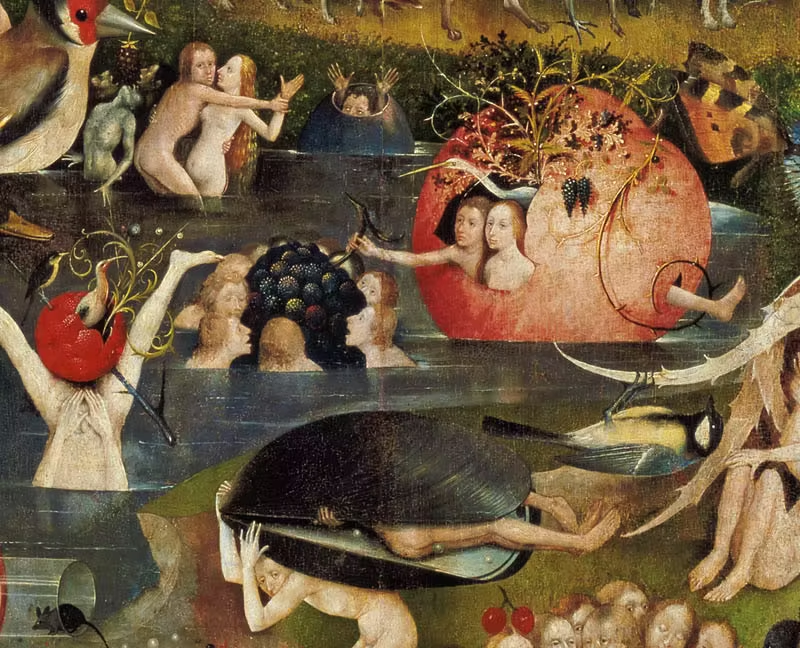
- Central panel (The Garden): Teeming with thousands of nude figures. Pay attention to the giant fruits (especially strawberries, blackberries, and cherries) — they symbolize the sweetness and fleetingness of carnal pleasures: the fruits quickly rot, just as human life does. Transparent glass globes containing the lovers illustrate a Flemish proverb: “Happiness and glass break so easily.”
- Right panel (Musical Hell): Instruments created for enjoyment (harp, lute, wheel lyre) here have turned into instruments of torture. Right here, on the sinner’s buttocks, the famous sheet-music score is engraved. In the center of hell, a horrifying figure of the “Man-Tree” towers, with an empty egg instead of a torso. Most art historians believe the face of this creature is the only reliable self-portrait of Bosch himself.
Interesting facts
- Music from hell sounds: In 2014, a student at a Christian university in Oklahoma deciphered those same “notes on the buttocks” from the right panel and translated them into modern notation. This eerie but harmonious melody is available online today.
- Surrealist to surrealism: Salvador Dalí and Joan Miró were ardent admirers of Bosch’s work. For hours, they studied this triptych at Madrid’s Prado Museum, borrowing from the Flemish master the idea of dreamlike, flowing forms and hybrid creatures—400 years before the official birth of surrealism.
What it gives the artist
- Uniform detailing without a focal point (horror vacui). Bosch fills the entire surface just as densely—no fragment is “more important” than another. This is called “fear of emptiness.” Try to make a sketch without a single focal point: fill the page with small elements where each one is equally important.
- A personal symbolic language. Every object in Bosch is a metaphor. A strawberry is pleasure; eggs are alchemical transformation and fragility; owls are treachery. Develop your own personal symbolic dictionary for your sketches to encode your own stories in them.
- Tone-contrast as narrative. The left panel is bright and transparent; the central one is warm and overcrowded; the right one is dark, contrasting, and cold (black background and flames). Try a series of three sketches on one theme, where the change in emotion is conveyed exclusively by changing the palette.
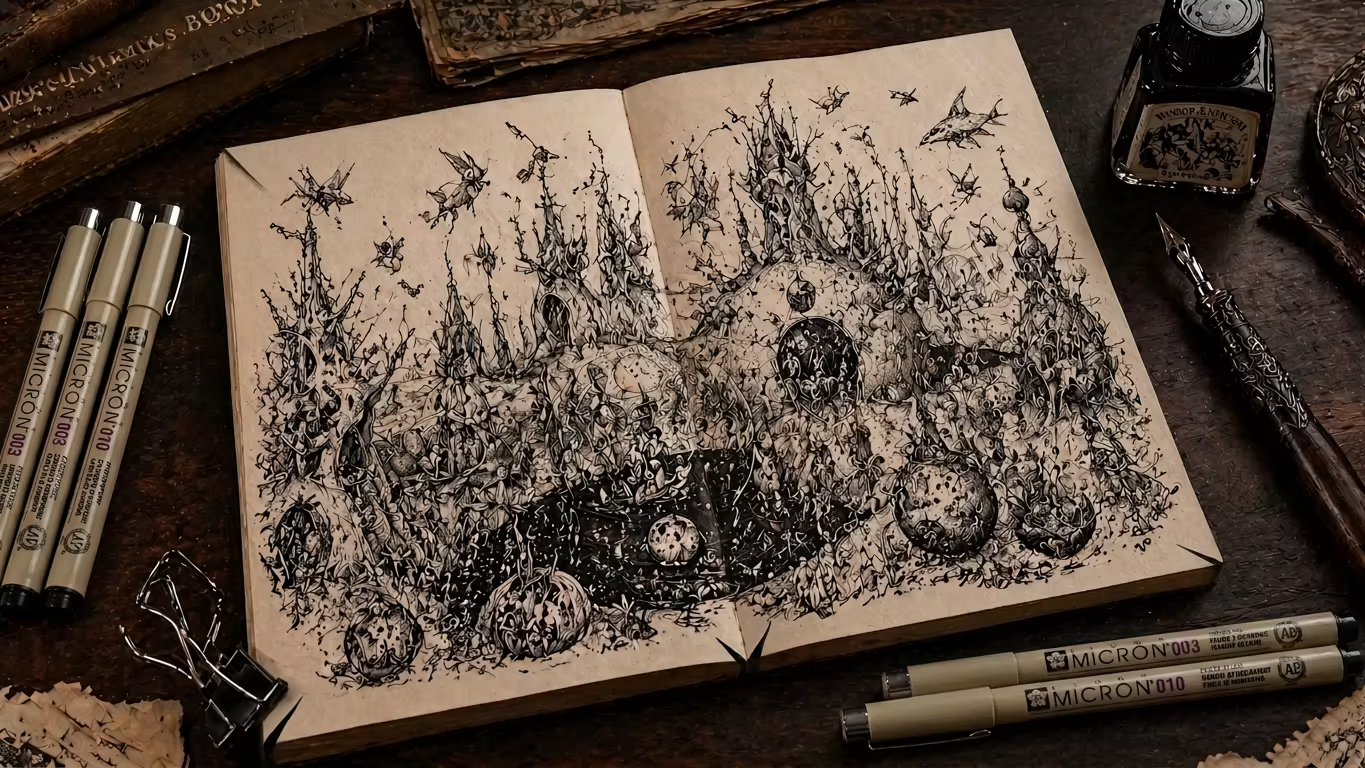
Working with such a richly detailed subject requires paper that can handle long-lasting detailing—multi-layer hatching, ink, watercolor over graphics. The sketchbook Bosch 1515 Plus was designed specifically for these tasks: Swedish designer cream-toned paper, 150 g/m², doesn’t smudge and doesn’t bleed through, and its tone resembles old parchment and manuscripts—exactly the kind of medium in which Bosch created his immortal riddles.