

Jan van Huysum: Perfectionism as a Method
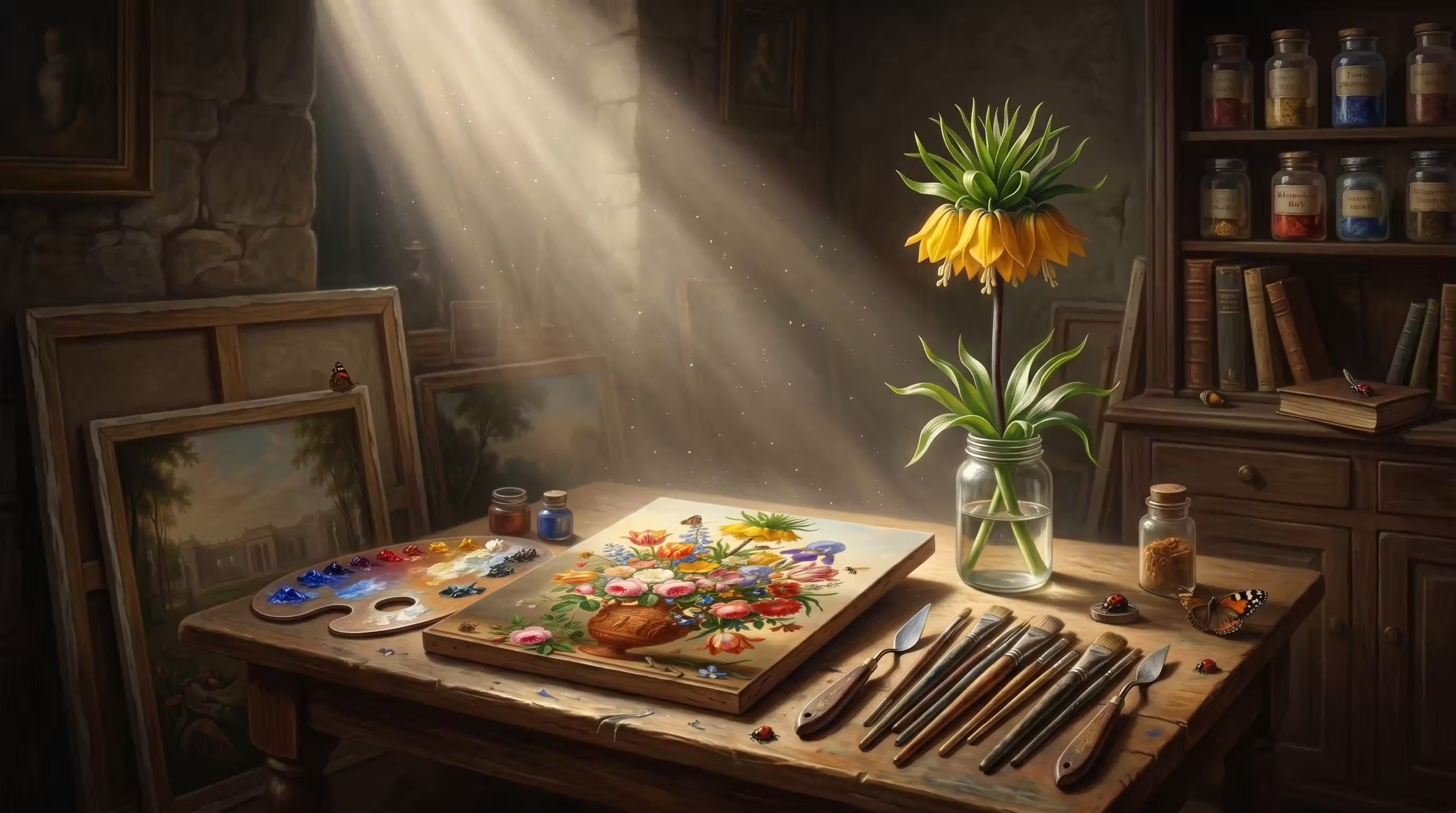
“Flowers in a Vase with Crown Imperial” — a still life that makes you hold your breath when you look at it. Van Huysum painted flowers for months, and sometimes even years, waiting for the right bud to bloom. Only after the perfect moment for each plant came did he transfer it to canvas. That’s what makes each of his works not just a beautiful picture, but a unique historical and botanical document.
The Story of Creation: Secrets of a Closed Workshop
Jan van Huysum was the best-paid artist of his time, and his fame reached far beyond the Netherlands. Yet he suffered from obsessive suspicion. The painter strictly forbade anyone from entering his workshop—even his own brothers. He panicked at the fear that someone might see how he mixed paints, or uncover his canvas-preparation technique.
Before him, Dutch still lifes were traditionally painted on a dark, almost black background. Huysum carried out a revolution: he began using light, sun-washed backgrounds (often with park landscapes or antique statues in the distance). This demanded a completely different approach to shadows and multi-layered glazing—an exact secret he took with him to the grave.
What you should look at here
- Fritillaria imperialis (Crown Imperial) at the top: This majestic flower, crowned with “crown,” crowns the composition. In nature, it never grows next to other flowers in this arrangement—this is purely an artistic choice, the staging of an ideal garden, not a botanical photograph.
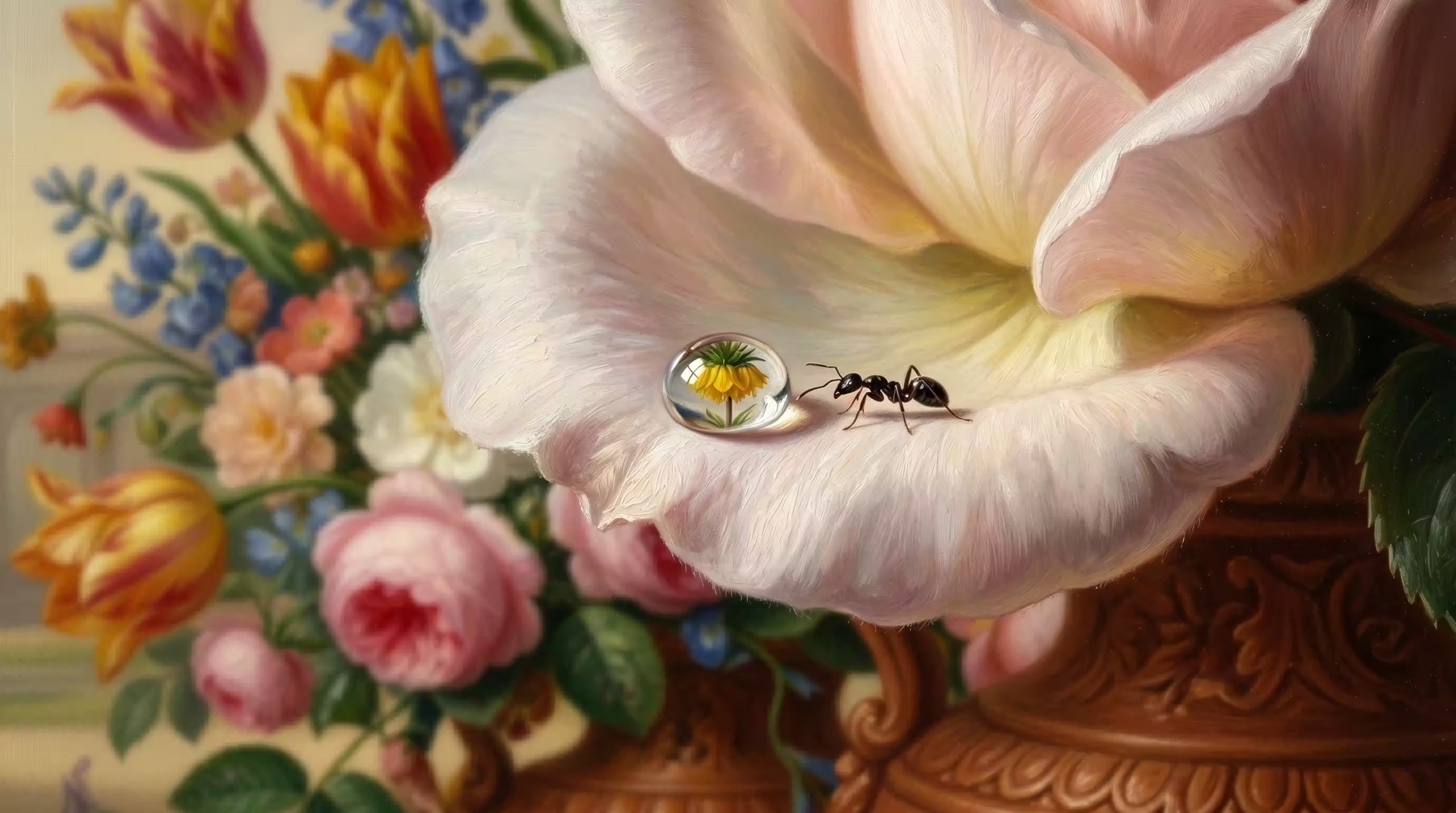
- A micro-world in the petals: Look more closely: on the leaves, raindrops hide, along with tiny ants, flies, and butterflies. The artist included them not only as a reminder of the transience of life (vanitas), but also as a detail that highlights the power of Flemish gardening.
- Light as a sculptor: Light falls from one side and gradually fades into the depths of the bouquet. Notice how one side of each petal is alive and glows, while the other is concealed in a soft shadow—creating the illusion of 3D volume.
- Terracotta vase: The vases in his paintings are rarely simple. Most often, they are decorated with classical bas-reliefs, which give the work a sense of ancient, eternal time.
Interesting facts
- Double dates: In many of his paintings, you can find two dates (for example, “1726 and 1727”). This is direct evidence that the artist stopped work for the winter and waited for the next spring to finish certain flowers painted from life.
- Precious pigments: For his works, van Huysum used the most expensive pigments of his time—such as natural ultramarine (from lapis lazuli) and carmine—which made creating a painting an incredibly costly process.
What it gives the artist
- Observation teaches you how to see. Only by staring at one element for a long time do you begin to notice what you previously just passed over without paying attention.
- A thin layer makes a huge difference. Huysum achieved natural transitions (from light to shadow, from transparent to opaque) thanks to thin layers of semi-transparent paint—glazing. One dense layer makes the surface flat; many transparent layers give it life.
- Carefulness as respect for your own observations. Patience in details is not just pedantry—it’s proof of your honest search and deep respect for nature.
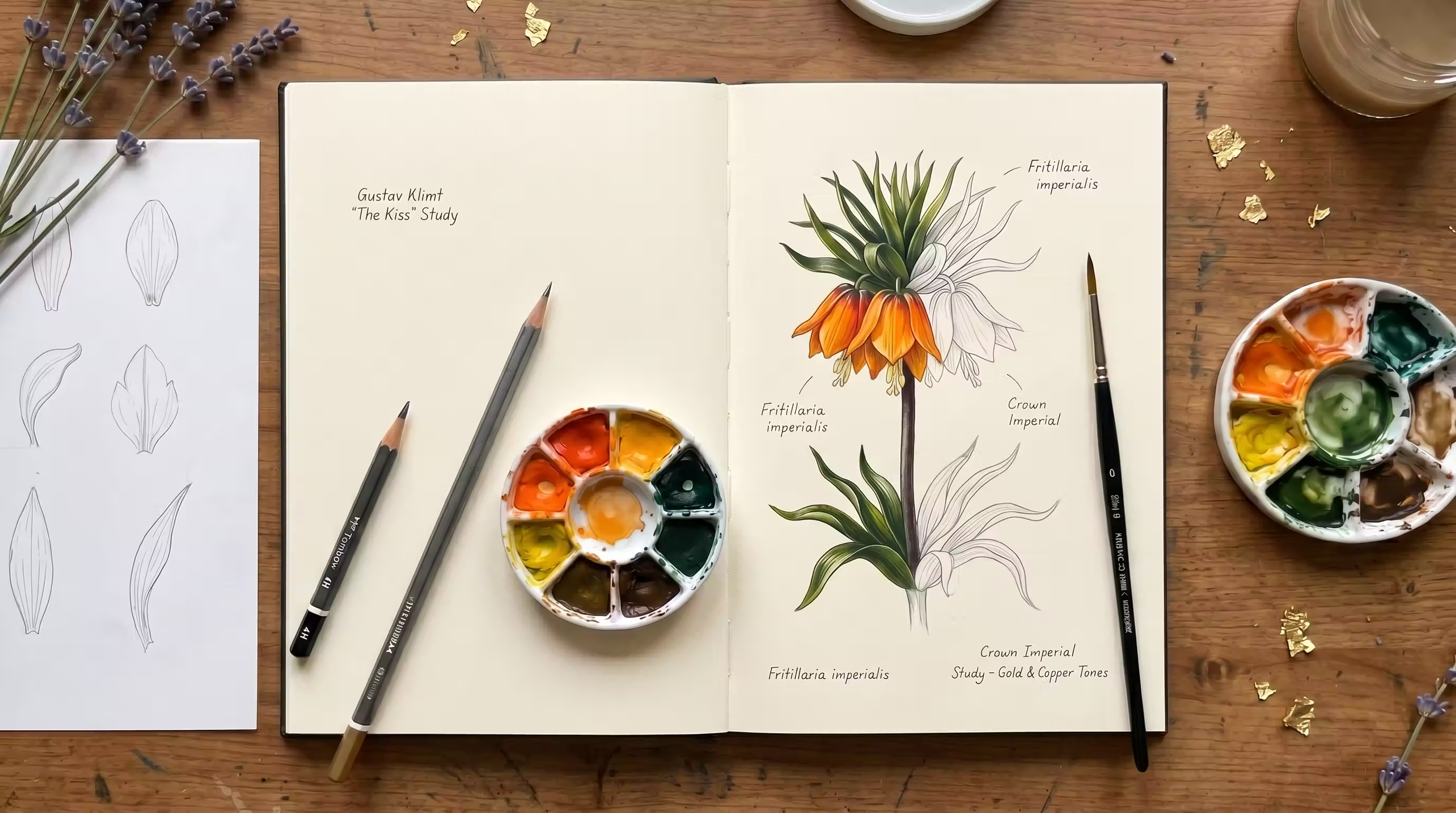
Van Huysum’s works prove it: for complex techniques, you need an ideal base that can handle a neutral background so the colors can truly come alive. Manuscript Plus sketchbooks on Swedish designer paper in a creamy shade, 150 g/m², provide exactly the right neutral warmth. On such a surface, graphite, watercolor, and markers sit equally impeccably—allowing you to focus on the details.