

Klimt “Portrait of Adele Bloch-Bauer”: the face as the center of the world
This painting is often called Austria’s “Mona Lisa”—and that is by no means an exaggeration. Adele looks straight at the viewer, wrapped in gold and ornaments, as if dissolving into them completely. Klimt didn’t just create a society portrait of a wealthy Viennese lady—he created an icon of the Modern era: a mystical image within an image, where the material merges with the eternal.
The story of creation: The Golden Cage and the stolen name
The portrait’s commissioner was Ferdinand Bloch-Bauer—a sugar magnate and one of the richest people in Vienna. Persistent rumors claimed a secret affair between Gustav Klimt and Adele. The legend says that when Ferdinand found out, he decided to take revenge in a refined way: he commissioned a portrait of his wife from Klimt, forcing them to spend hundreds of hours together in exhausting posing sessions, hoping they would simply get bored with each other.
But the most dramatic events unfolded after Adele and Klimt died. During World War II, the Nazis confiscated the Bloch-Bauer estate along with the painting. To conceal the model’s Jewish origins, they erased her name from the plaque and renamed the masterpiece to the emotionally cold “Woman in Gold.” Only in 2006, after a long and highly publicized court case, did Adele’s niece, Maria Altmann, manage to return the portrait to her family.

What’s worth looking at here
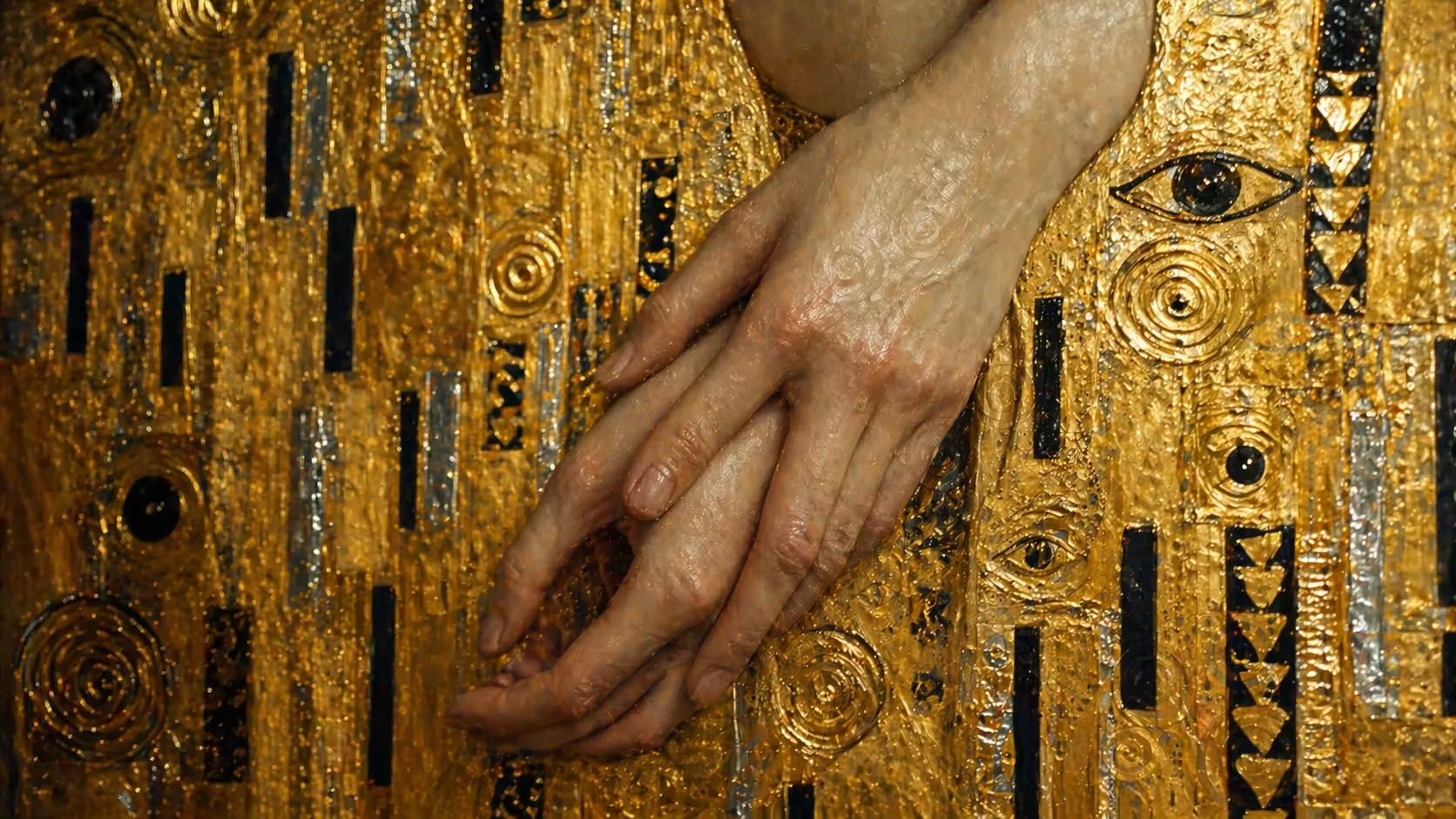
- The contrast of the living and the dead: Adele’s face, neck, and delicate hands, nervously interlaced, are the only truly realistic parts of the painting. Her body dissolves into a flat gold surface and becomes part of the ornament. It creates the feeling that a living woman is looking at us through a golden mask—or armor.
- Encoded symbols: In the golden background, mystical signs are hidden: Egyptian “Eyes of Horus” (symbols of protection), Mycenaean spirals, Byzantine mosaics, and even stylized initials “AB” (Adele Bloch). The portrait became a visual historical dialogue of an era.
- The famous necklace: Pay attention to the massive diamond necklace on Adele’s neck. It is a real piece of jewelry that her husband gave her. Later, the Nazis confiscated it, and, by a twist of fate, it ended up with Hermann Göring’s wife.
- Gaze: Adele’s eyes are calm, slightly tired, with a certain concealed sadness—ingeniously conveying the melancholy and fragility of a real person’s life behind the façade of dazzling luxury.
Interesting facts
- Obsessed with sketches: For this portrait, Klimt created more than 100 preliminary studies and pencil sketches. He searched for the perfect pose for years. The work lasted from 1903 to 1907.
- Adele twice: Adele Bloch-Bauer is the only woman Klimt painted twice. Her second portrait (1912) was done in a completely different, colorful style, without using gold.
- A record value: In 2006, the heiress sold the painting to Ronald Lauder (the founder of Neue Galerie in New York) for an astonishing $135 million, making it, at that time, the most expensive painting in the world.
What it gives to the artist
- A portrait is not only likeness, but also character. Klimt conveys not so much anatomy as the inner essence—through the tension of the fingers, the head’s posture, and the melancholic gaze.
- The background can speak louder than the figure. Gold is not just a backdrop—it’s a statement about status, the era, and the importance of the model. The background can be an active participant in the composition.
- Different doesn’t mean contradictory. Klimt perfectly juxtaposed the hyperrealism of the face with the fully flat abstraction of the dress—and they only reinforce each other. It’s a powerful technique that can be applied in contemporary illustration or sketching.
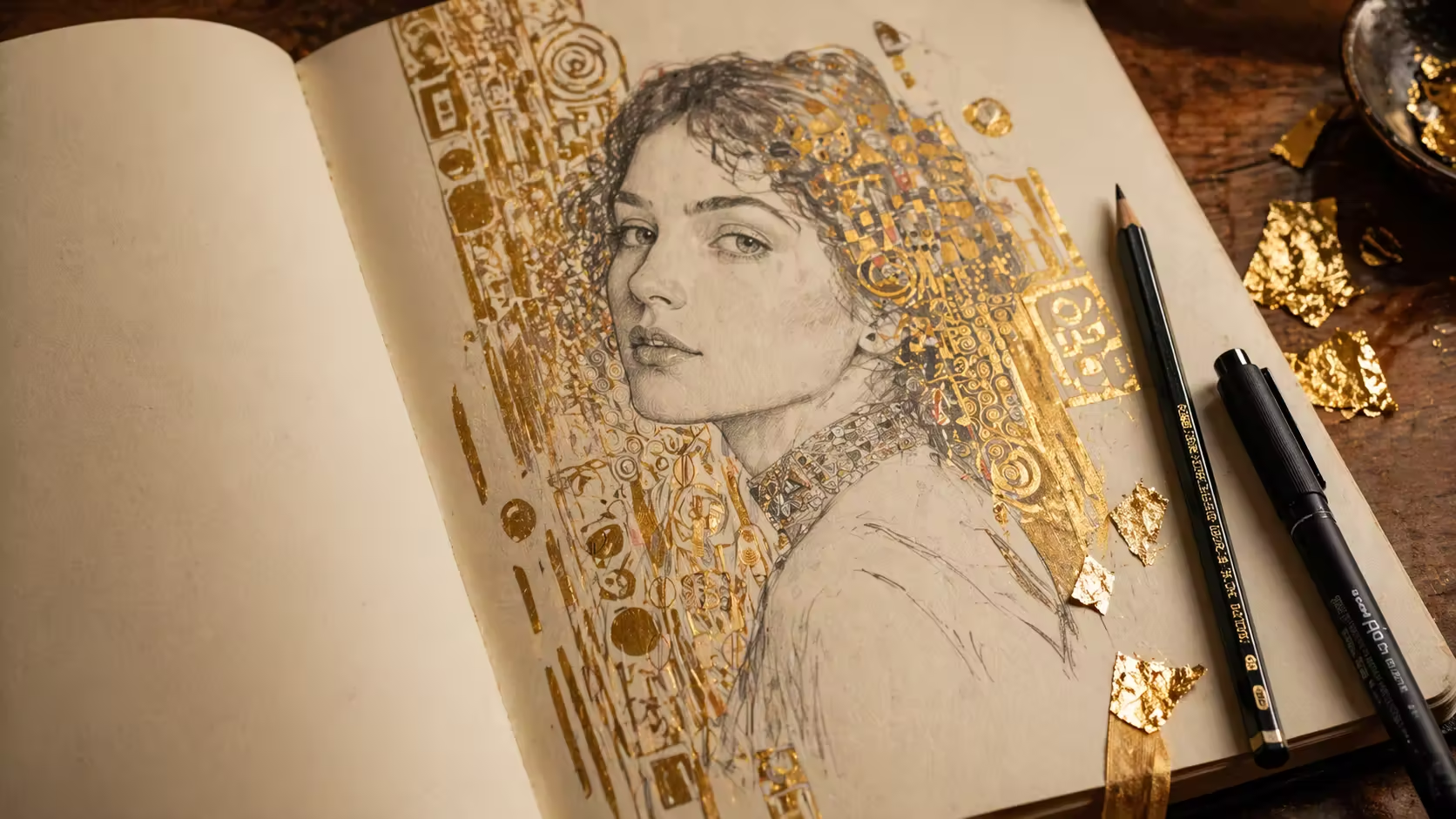
Portraits in Klimt’s style require thoughtful work with detail and texture. Manuscript Plus sketchbooks on Swedish designer paper in a creamy 150 g/m² shade provide a surface with character—one you want to draw on, not just to make notes. The creamy tone perfectly emphasizes the contrast of graphite, and the density lets you confidently experiment with metallic liners, potal, or gold watercolor.