

Klimt “The Kiss”: when gold becomes a hiding place
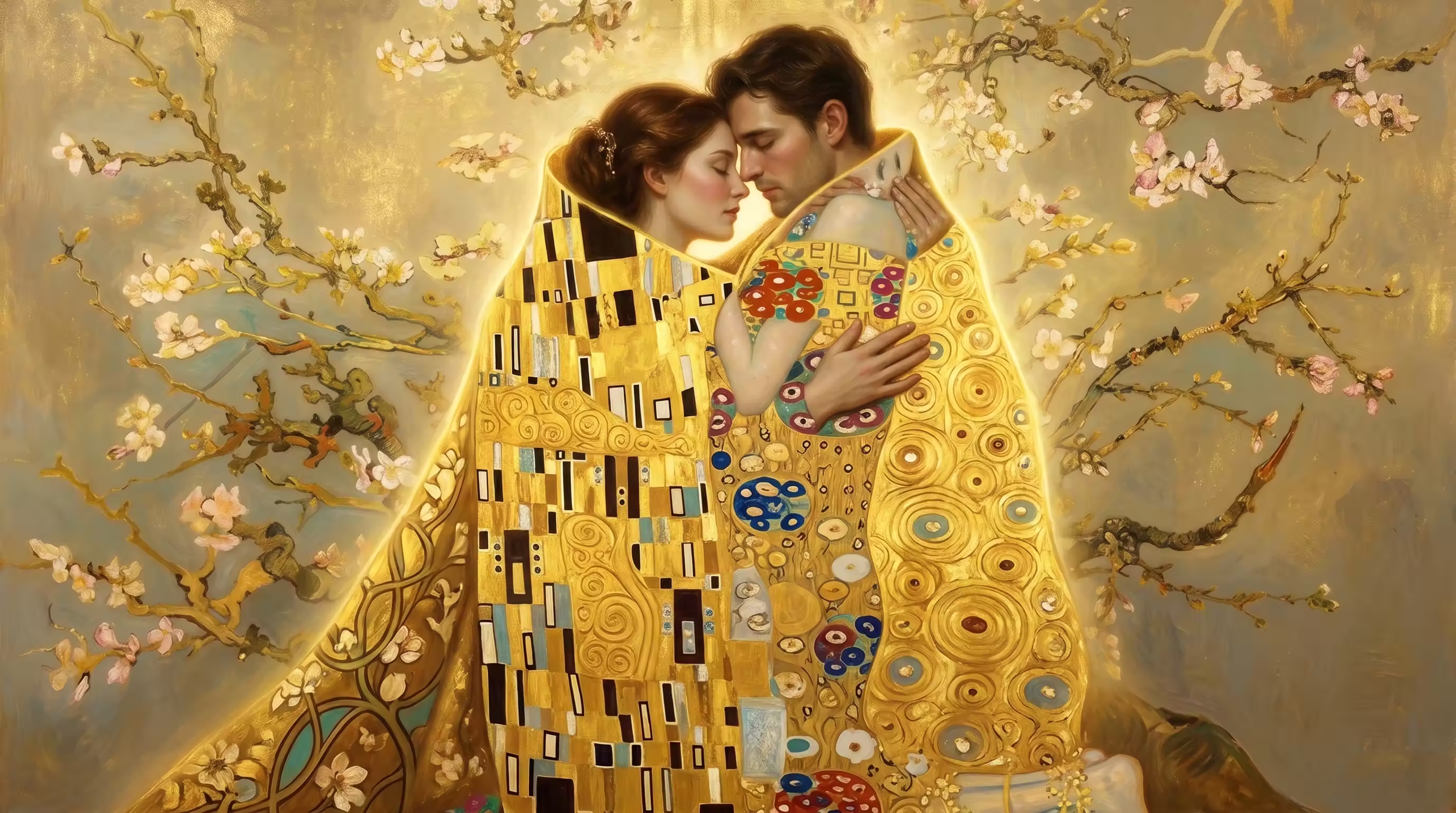
Klimt painted “The Kiss” in 1907–1908—at the peak of his famous “golden period.” The painting is covered with real gold leaf and platinum. This is not a portrait and not a landscape—it is precisely a feeling rendered as a sacred ritual. That is why this work does not age and will never lose its relevance.
The story of creation: Byzantium and an escape from criticism
The masterpiece was preceded by quite a scandal. A few years earlier, Klimt created three monumental works for the University of Vienna. Society and critics considered them too outspoken and even accused the artist of “pornography.” Klimt took back his paintings, returned the fee, and plunged into a crisis.
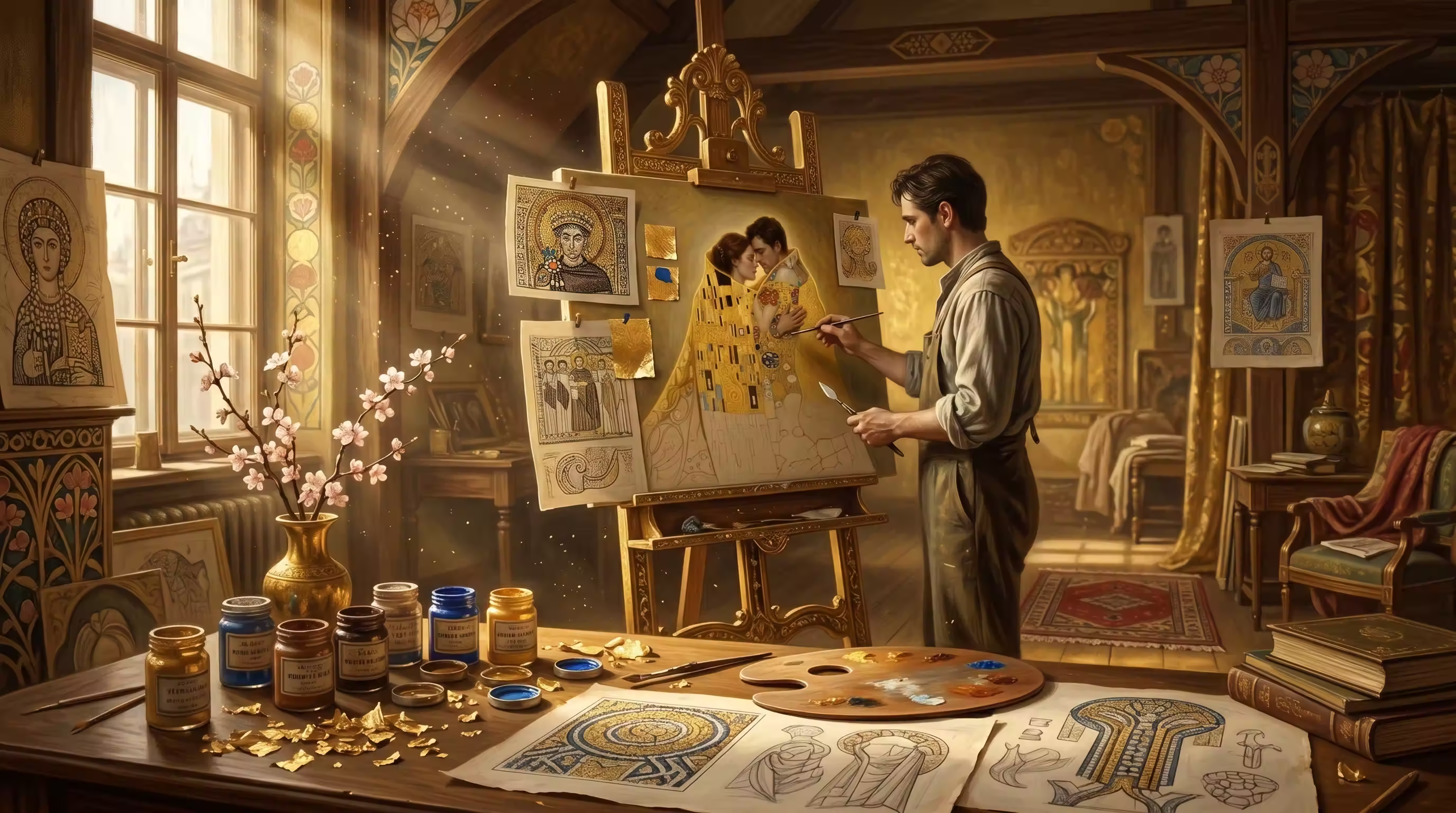
Seeking peace, he went to Italy, to Ravenna. There, in the Basilica of San Vitale, he saw ancient Byzantine mosaics. This gold radiance, on equal two-dimensional surfaces, completely changed his vision. Returning to Vienna, Klimt begins his “Golden Period,” the pinnacle of which became “The Kiss.” Gold allowed him to hide reality by creating a space where there is no judgment—only eternity.
What to look at here
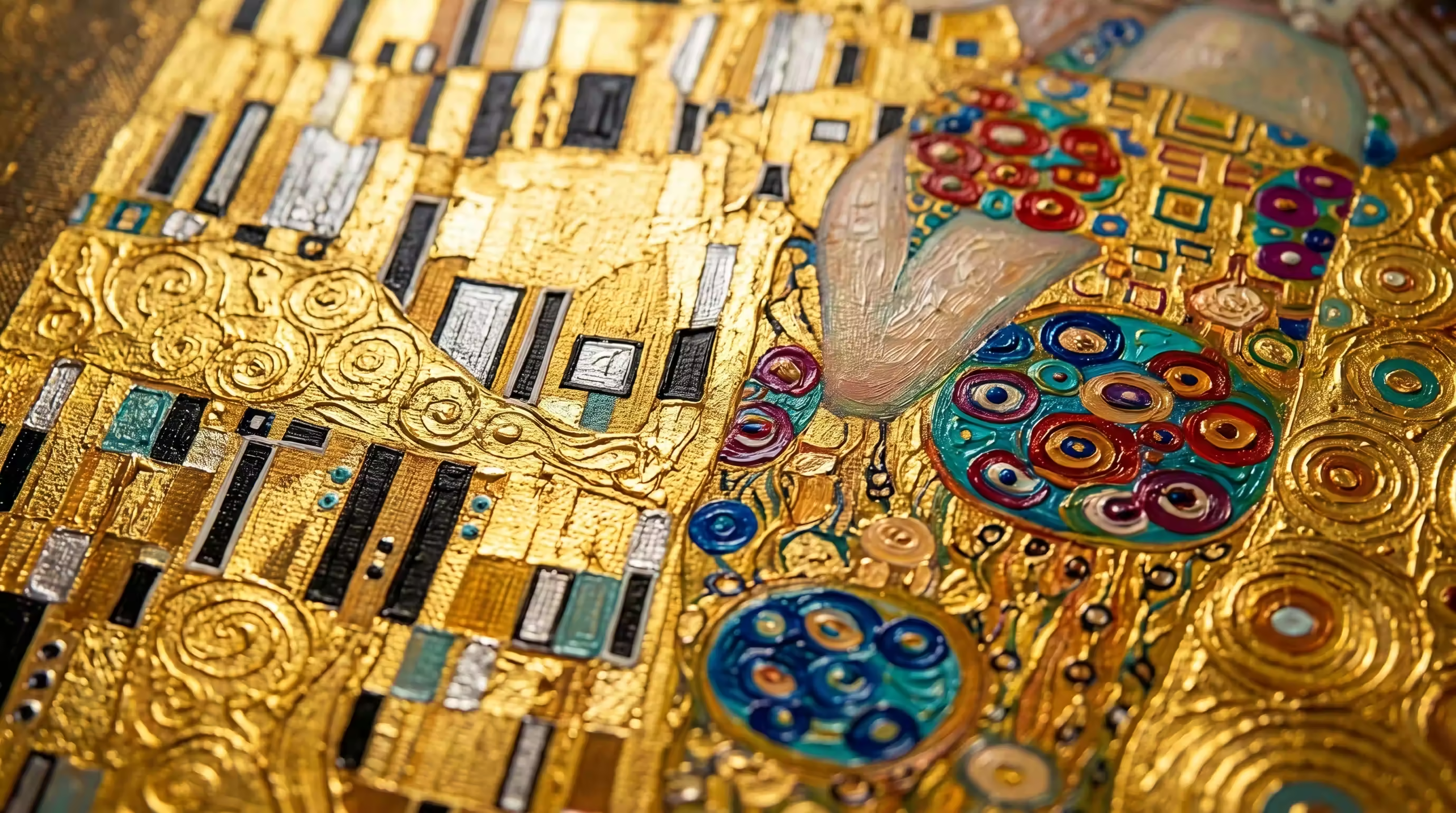
- Language of ornaments: Pay attention to the contrast. The man’s clothing is covered with harsh, graphic black-and-white rectangles (a symbol of masculine energy). The woman’s dress has smooth, rounded forms, floral motifs, and vivid circles (a symbol of feminine nature). In each other’s embrace, these two different worlds merge into a single golden cocoon.
- 2D vs. 3D contrast: The lovers’ bodies are completely concealed by a flat ornament, making the figure almost a two-dimensional abstraction. Meanwhile, the faces and hands are painted incredibly realistically—volumetrically. Klimt minimized the physical element but intensified the emotional one.
- The golden background as infinity: This is not a wall and not a landscape. It is a shining “nothing.” A moment torn from the flow of time and locked into eternity.
- A bottomless abyss beneath your feet: The flower meadow where the couple stands abruptly breaks off. They are literally at the edge of a precipice. This hints that true passion tears us away from the earth and always carries an element of danger.
Interesting facts
- Who is depicted in the painting? Most art historians agree that the man is none other than Gustav Klimt himself, and the woman is his life companion and muse—Emilie Flöge, the designer.
- Bought unfinished: The work caused such delight that the Austrian government bought it for the Belvedere gallery before Klimt even managed to make his final brushstrokes. They paid 25,000 crowns (a crazy sum for that time, which made it Austria’s most expensive painting).
- The perfect square: The painting measures 180 by 180 centimeters. This perfect square format gives the composition incredible stability and calm.
What this gives the artist
- The pattern can carry a narrative. Klimt uses pattern as a meaningful statement. Form and ornament are not decoration, but a deep story about the masculine and the feminine.
- Simplification as a way to focus. Klimt concentrates attention on the one thing—on the emotions on the faces and the position of the hands. Everything else that could distract from the essence of the kiss disappears into the gold.
- Gold and color have an emotional temperature. Warm gold creates a sense of a sanctuary and coziness. Each work has its own palette of mood that can be built using non-standard materials.
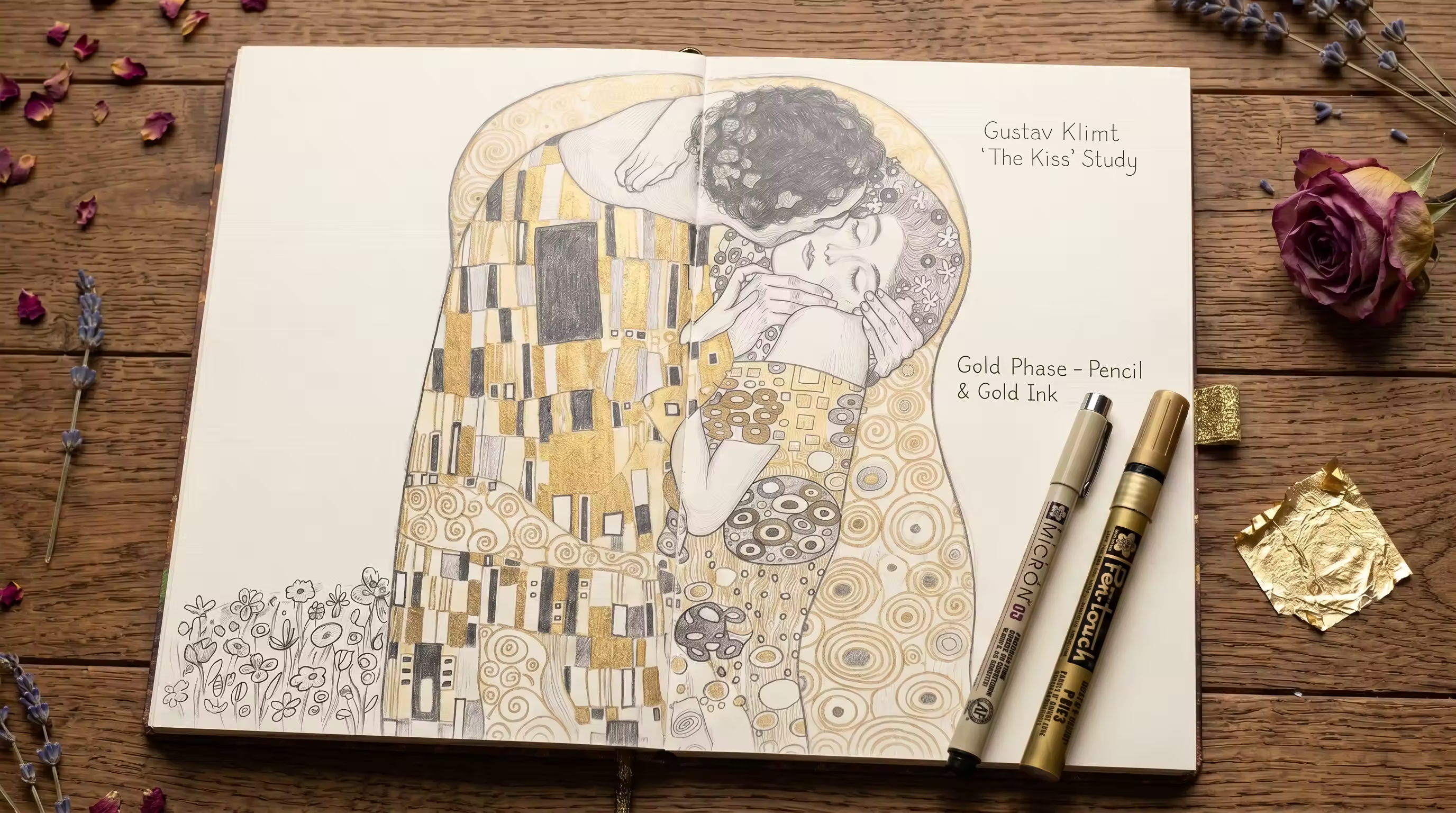
For a work where color, surface texture, and the clarity of ornament matter, you need paper with character. Manuscript Plus sketchbooks on Swedish designer cream-toned paper, 150 g/m², have a pleasant surface that doesn’t blur the color, keeps a liner or pen line crisp, and is perfectly suited for use with gold or metallic markers.